
The Dyrt
The Dyrt is the #1 camping app in the US, over 44,000 campgrounds, a million-plus user reviews, and a commission-free booking model that sets it apart from other players in the space.
Overview
Context
The Dyrt is the largest camping app in the US: 44,000-plus campgrounds, over a million user reviews, and roughly 30 million annual visits. Founded in 2013 out of Portland, its commission-free booking model is what separates it from other campground booking platforms.
I joined in November 2020, the same week the company closed its Series A-III funding round. That timing wasn't a coincidence. The company was small, around 40 employees, and had never had a dedicated design function build out a real tool for the people running the campgrounds themselves. That gap was mine to close.
My Role
What I designed
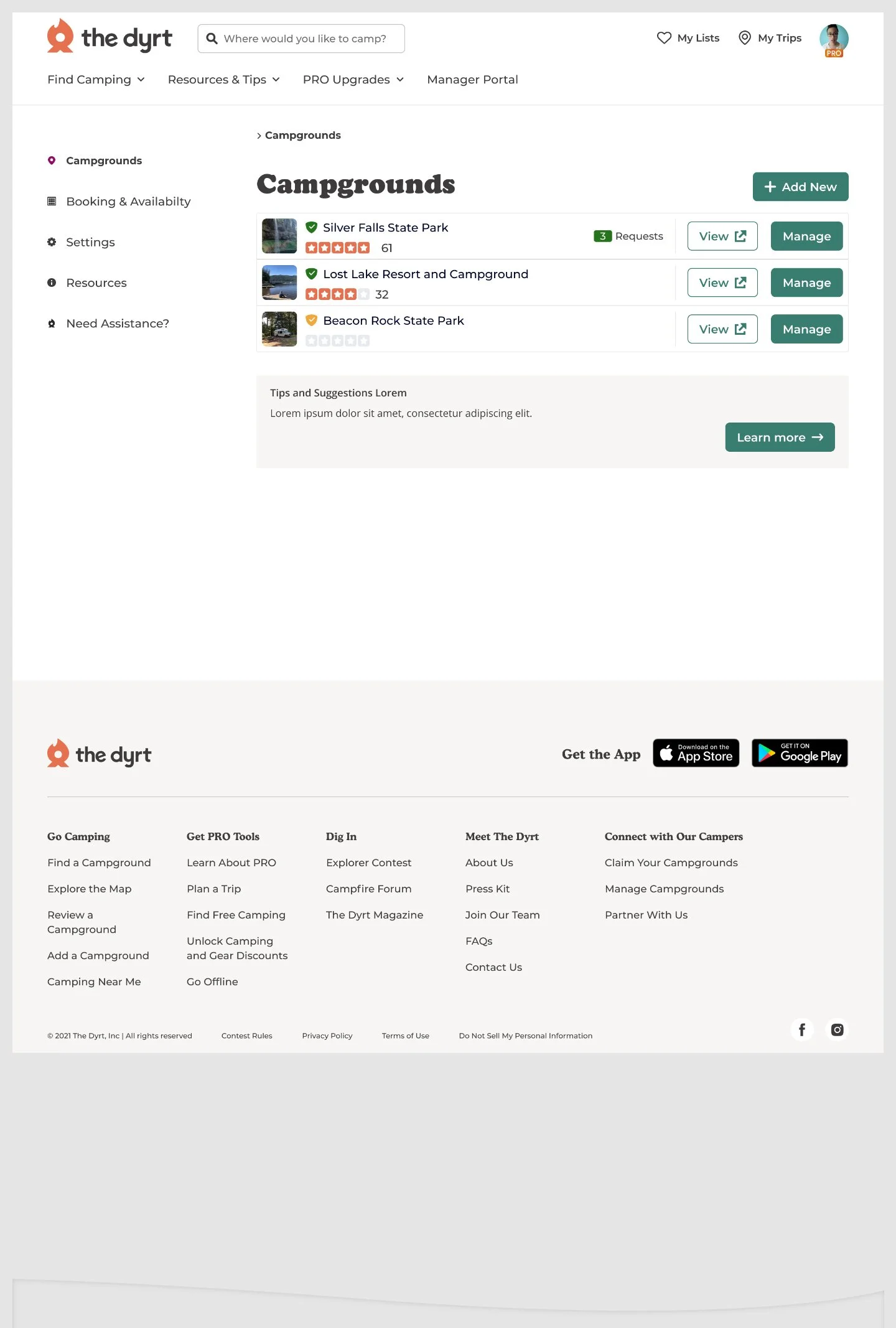
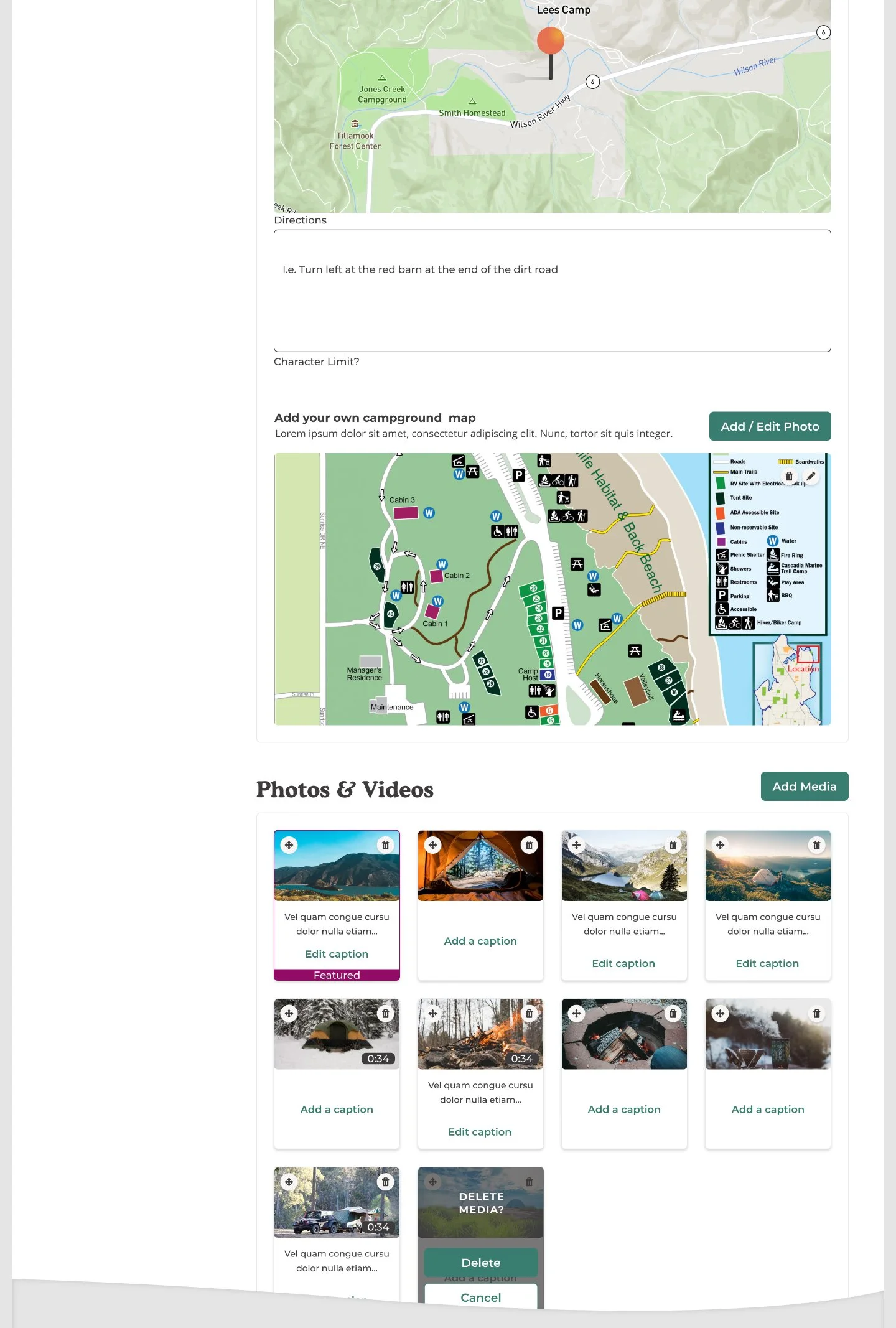
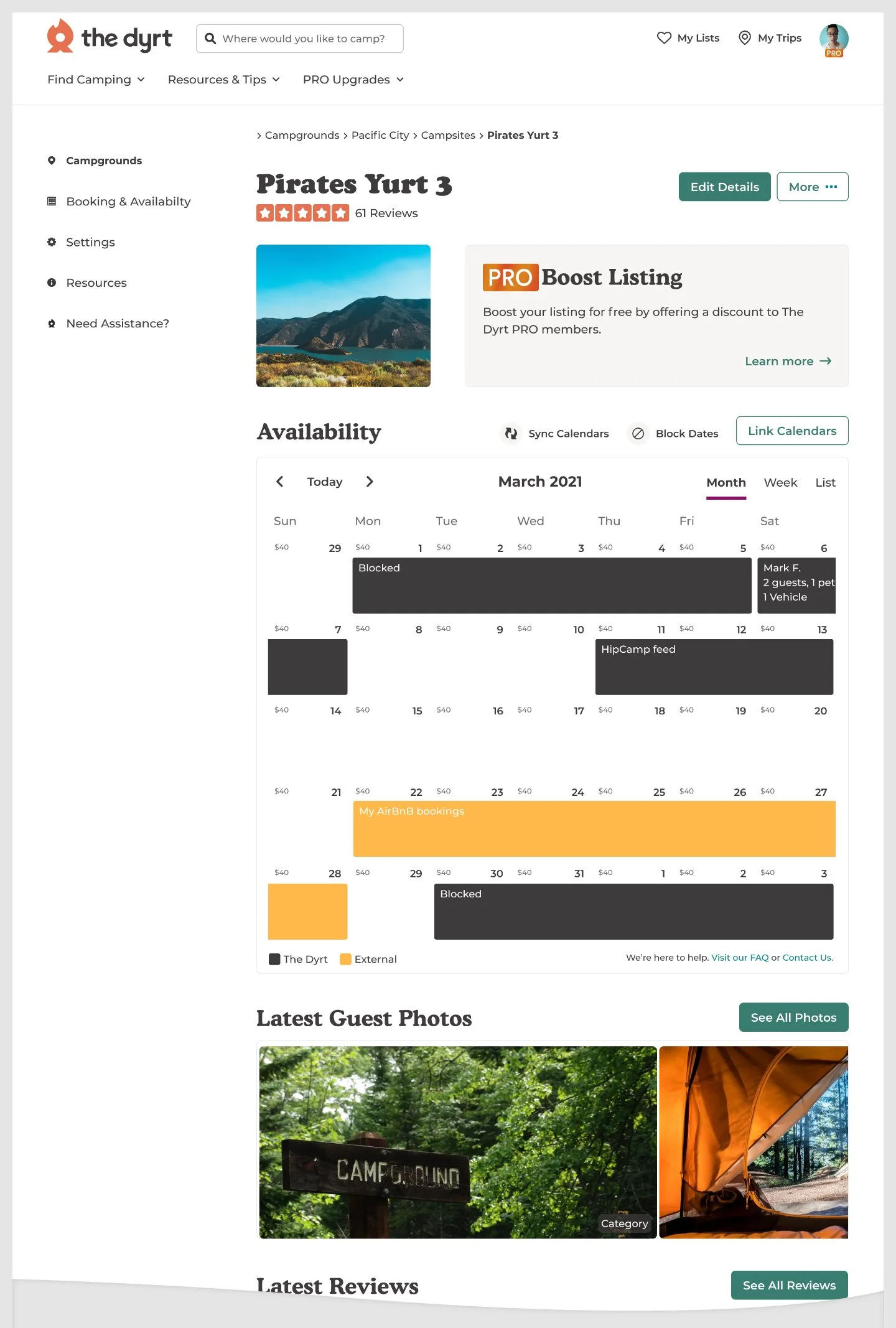
Manager Portal, the admin tool campground owners and managers use to run their listings: bookings, sites, amenities, media, review moderation, guest communication, payouts, and calendar sync with outside property management tools
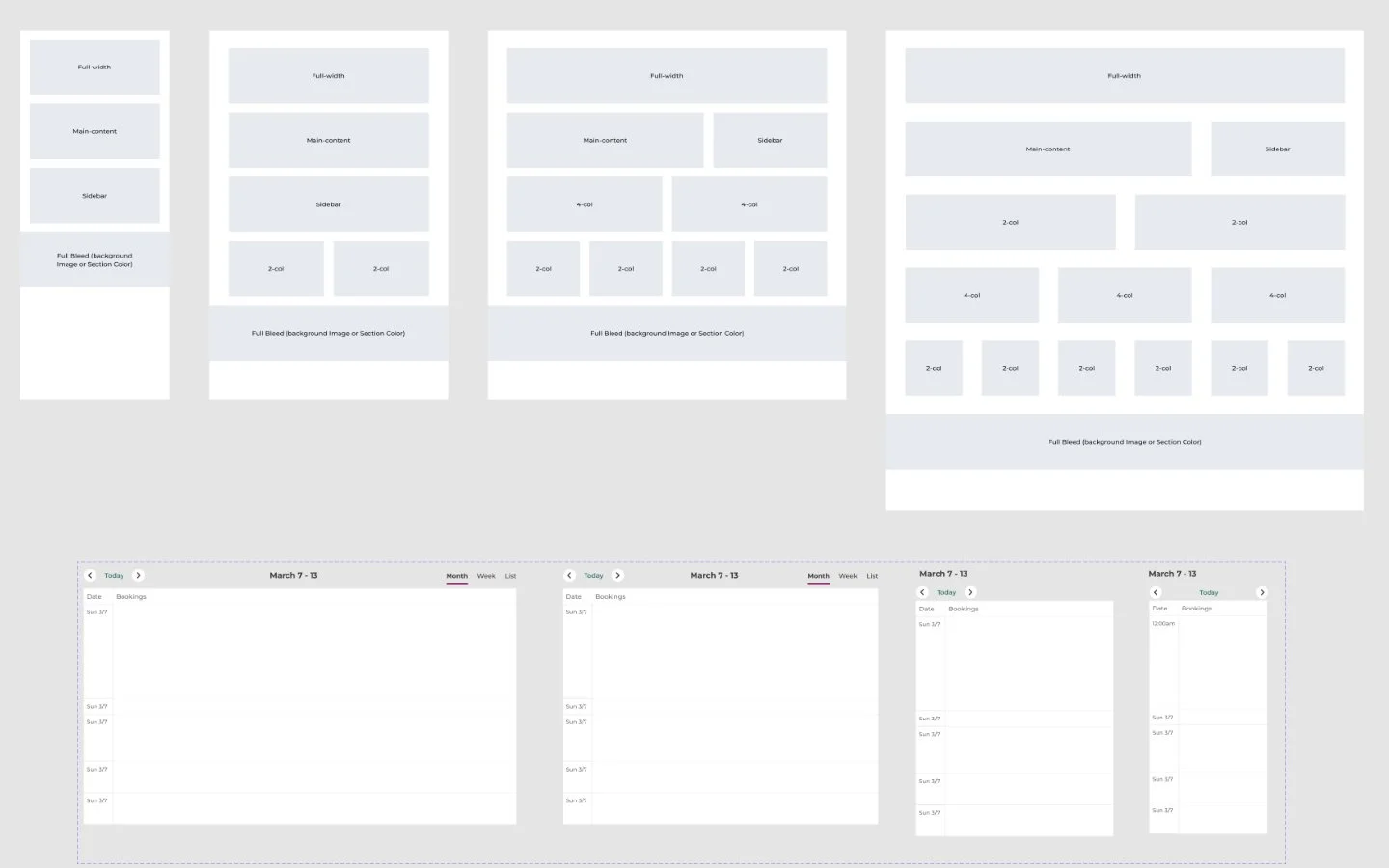
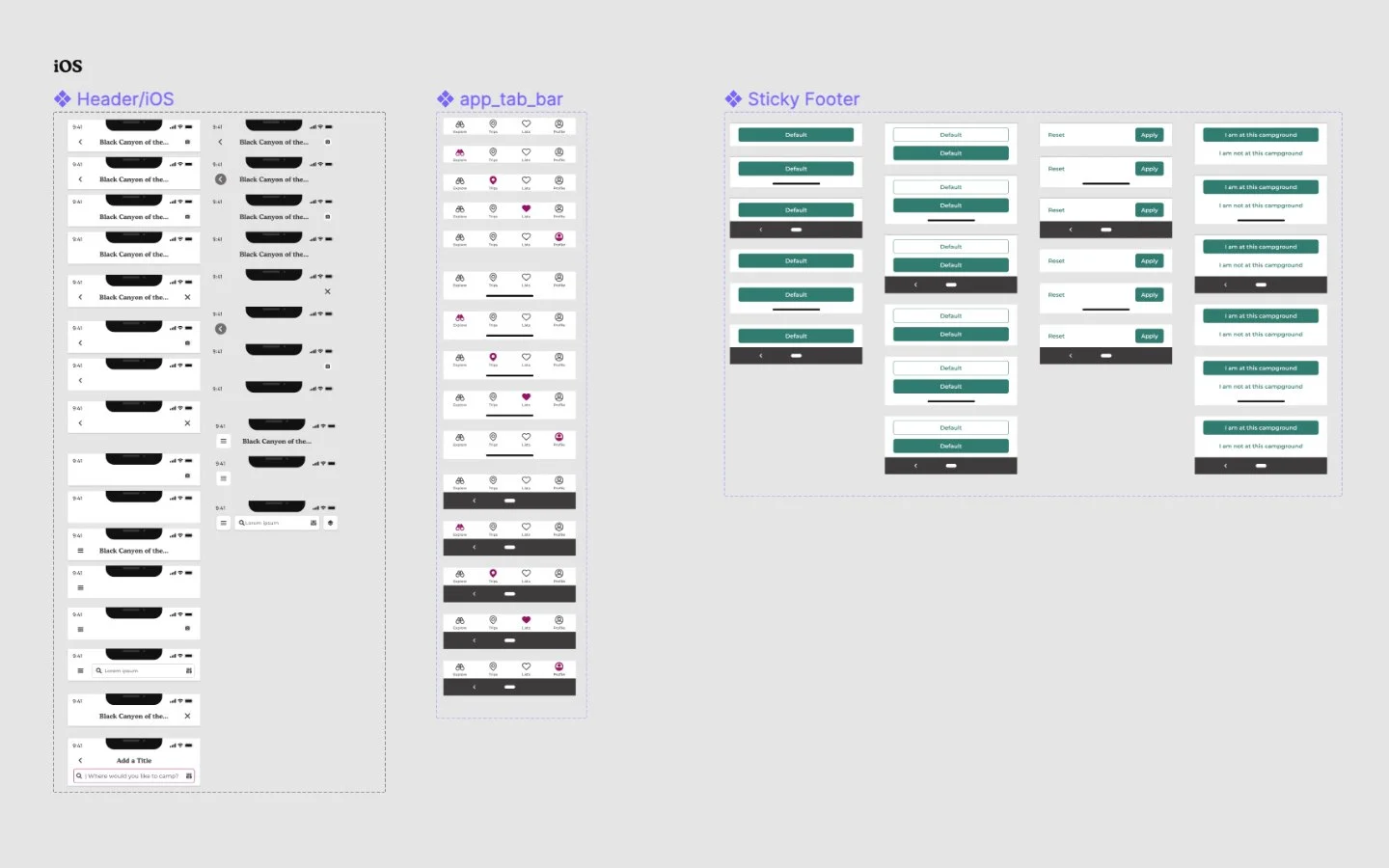
S'mores, The Dyrt's design system, built in Sketch
What I led
Sole ownership of Manager Portal from initial audit through ongoing iteration, with no existing requirements to build from
Organization, deployment, and quality control of S'mores across a small contributing team
An early push toward better design tooling, piloting Ditto for centralized copy management and GitHub for Sketch version control, ahead of where the team was ready to go
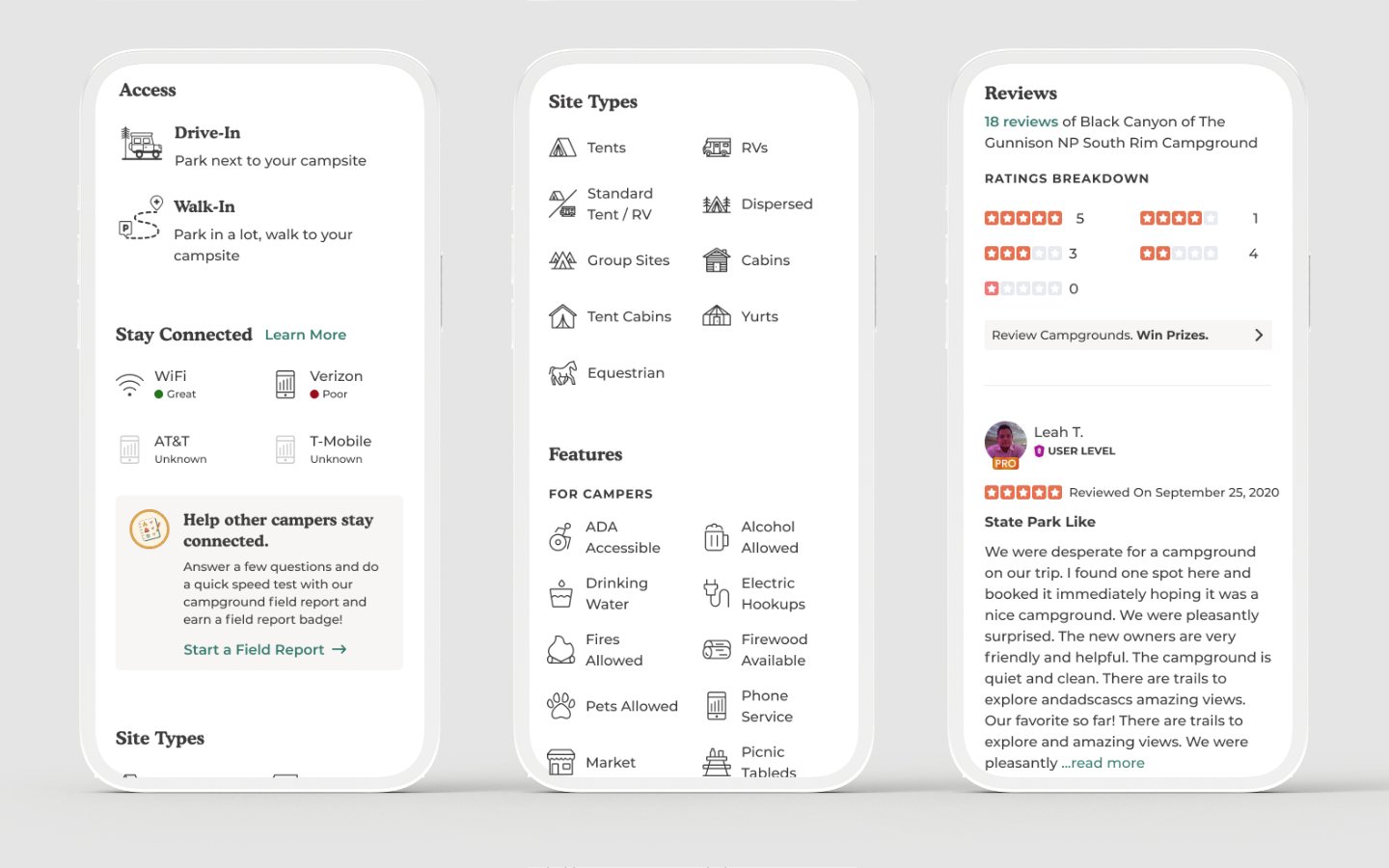
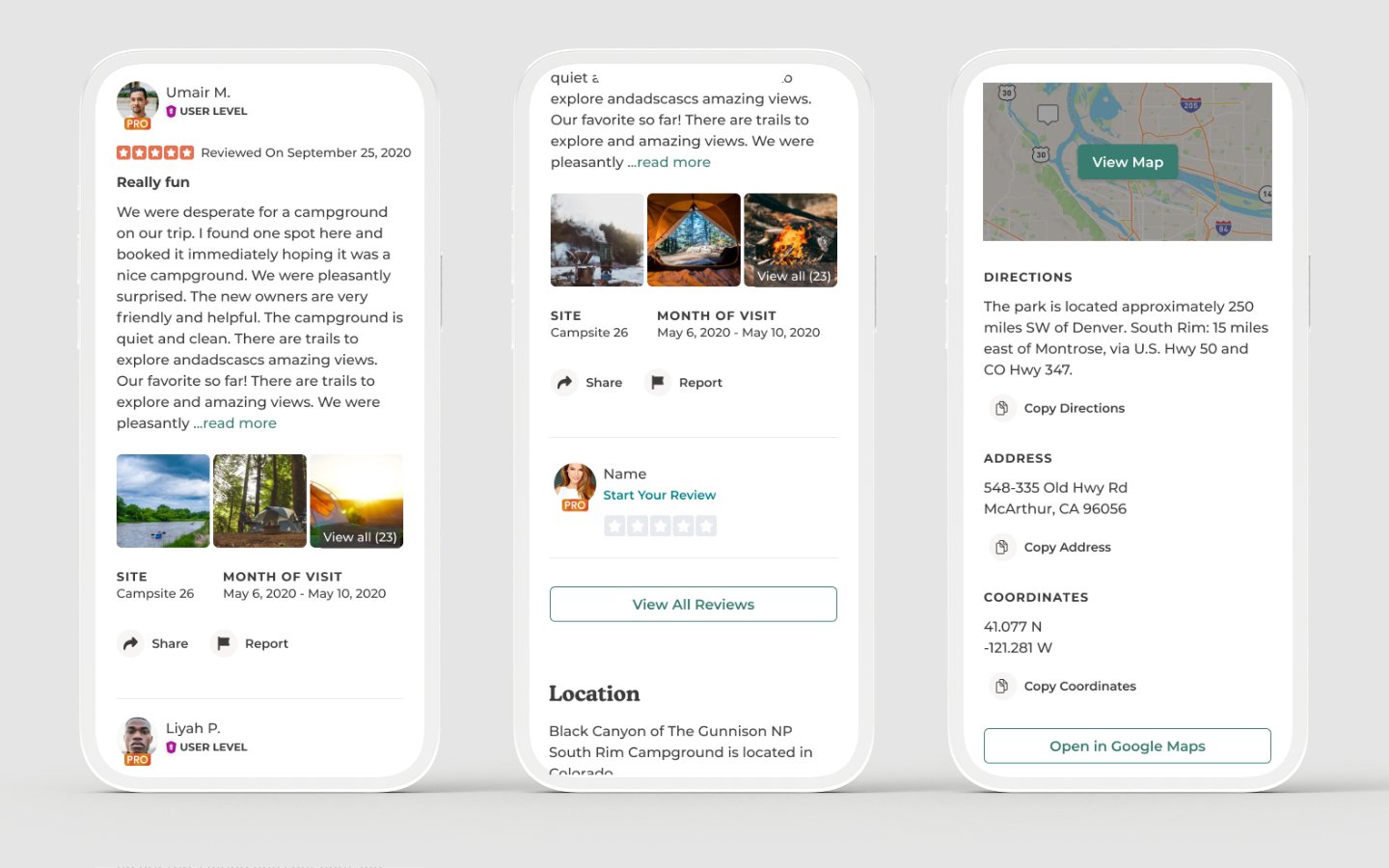
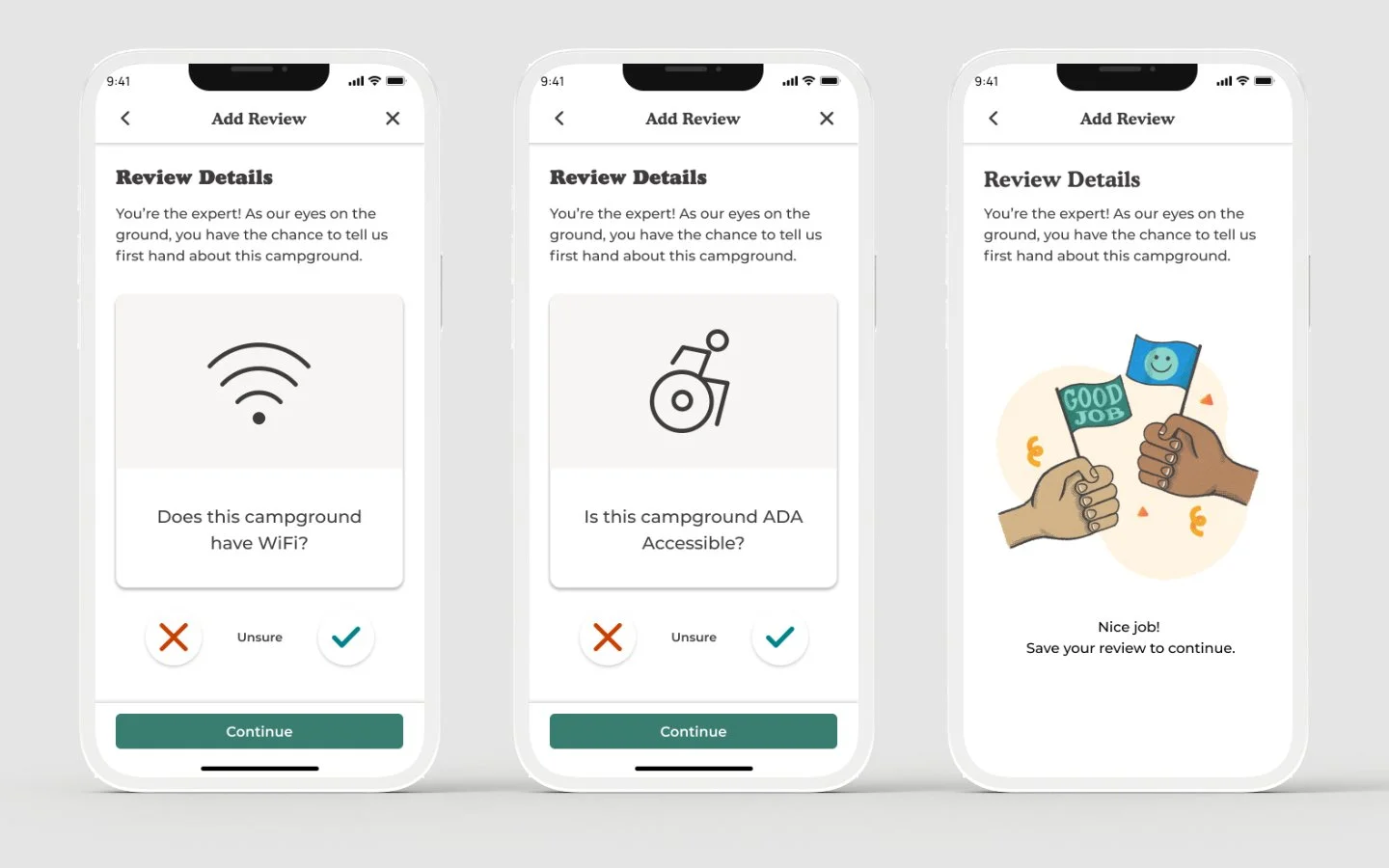
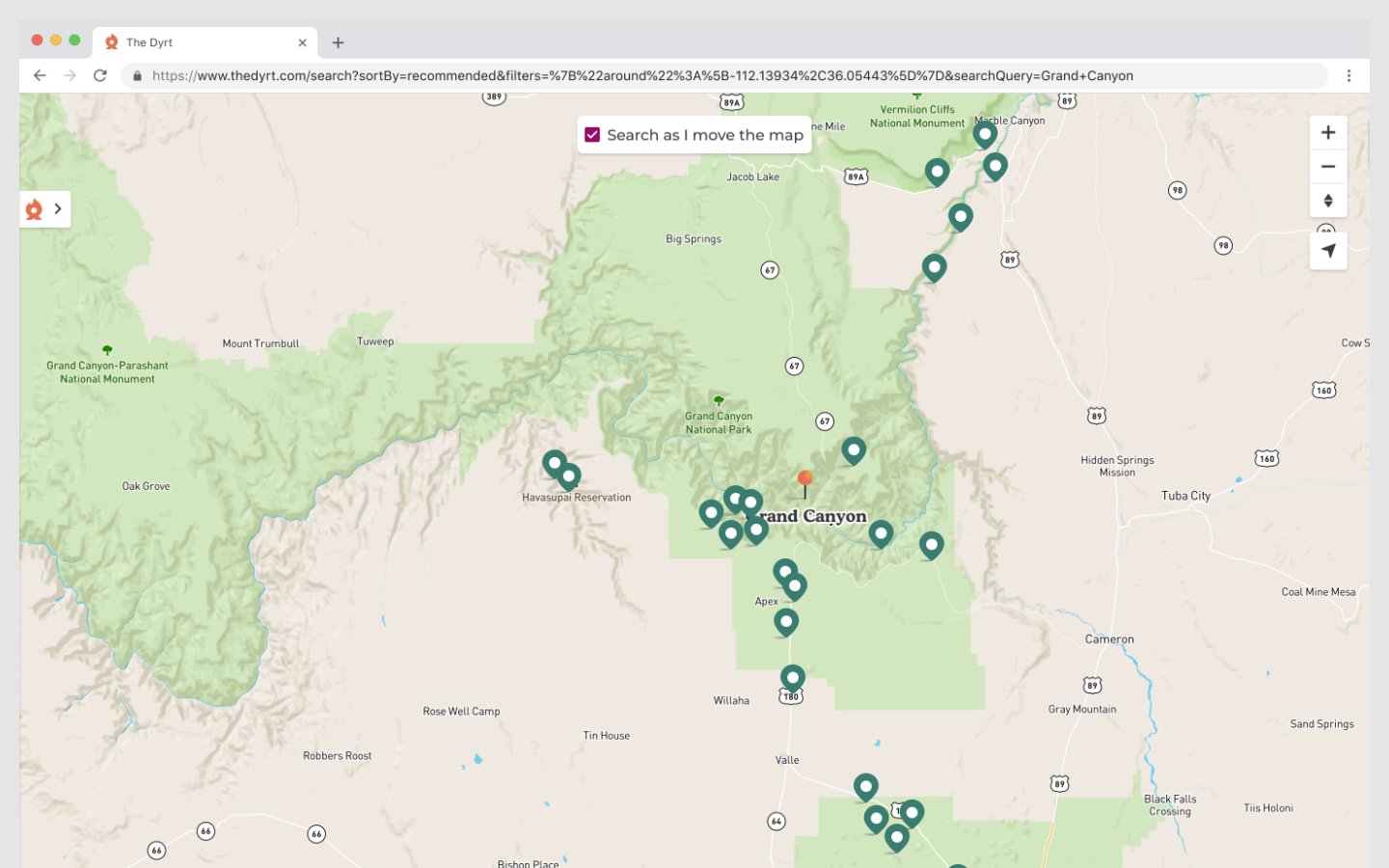
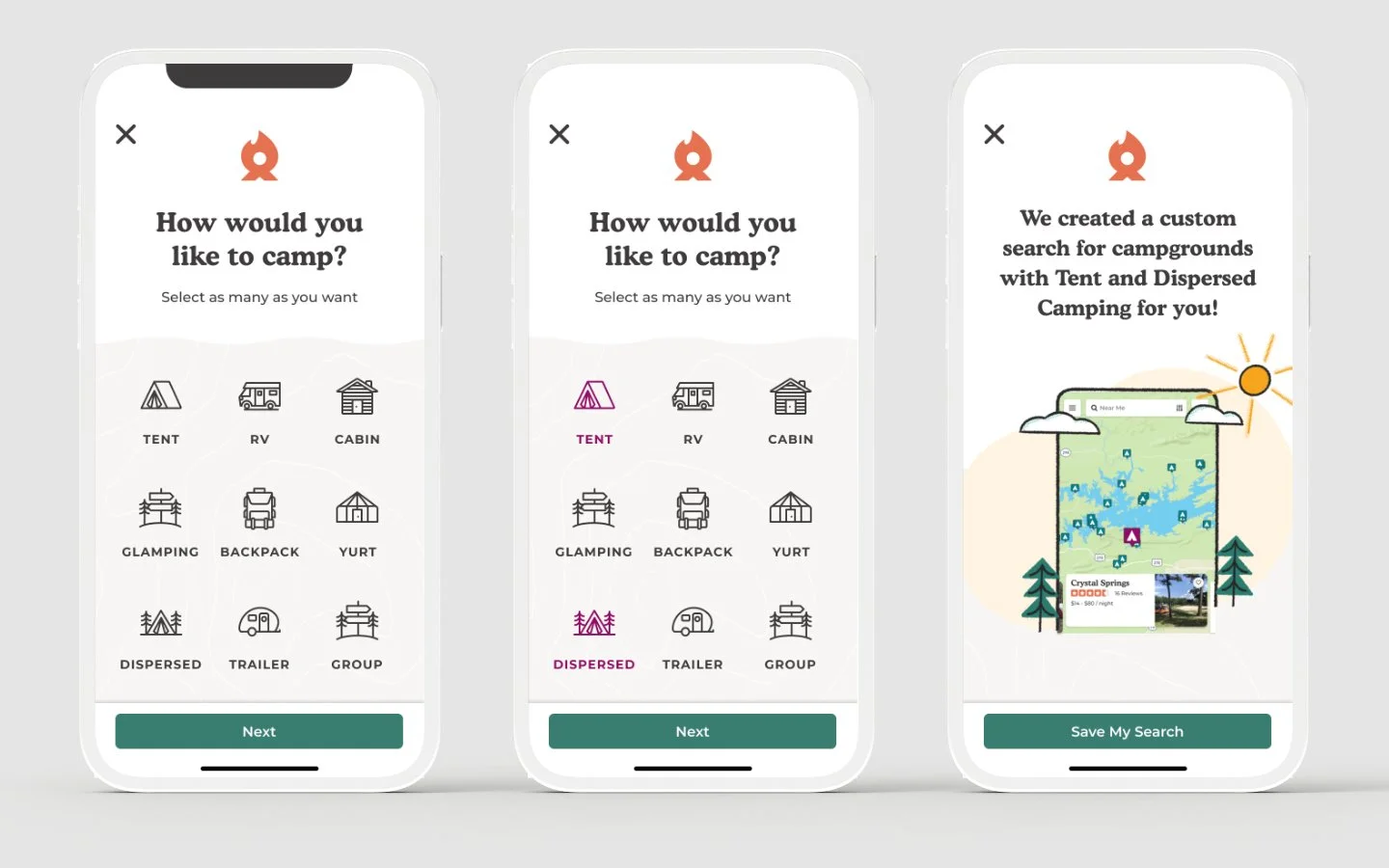
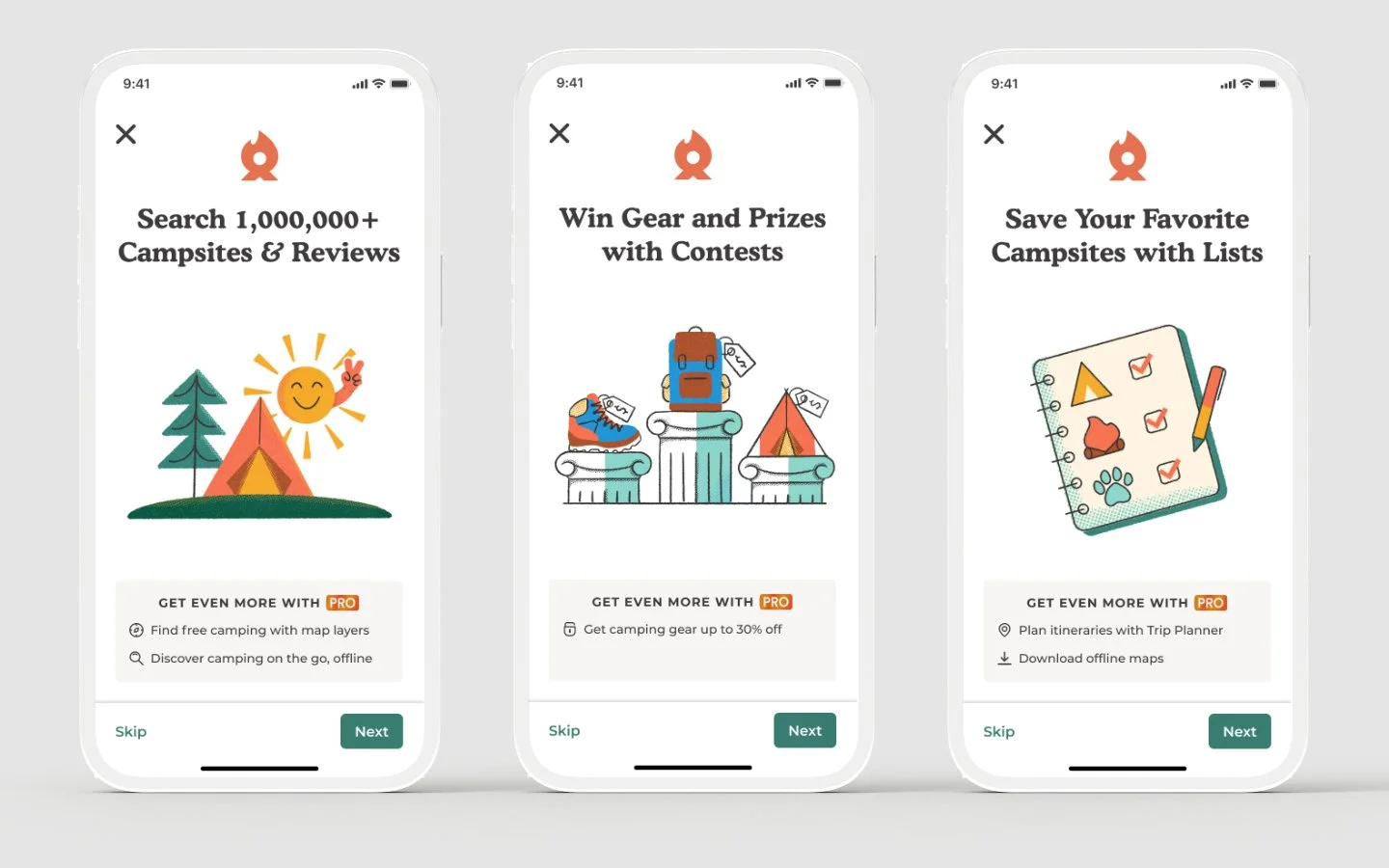
I also contributed to smaller consumer-facing efforts, Campground Details pages, the Review Wizard, search, and onboarding, work that fed into and benefited from S'mores but wasn't mine to lead.
No spec, no system. Just campground owners who needed to run their business
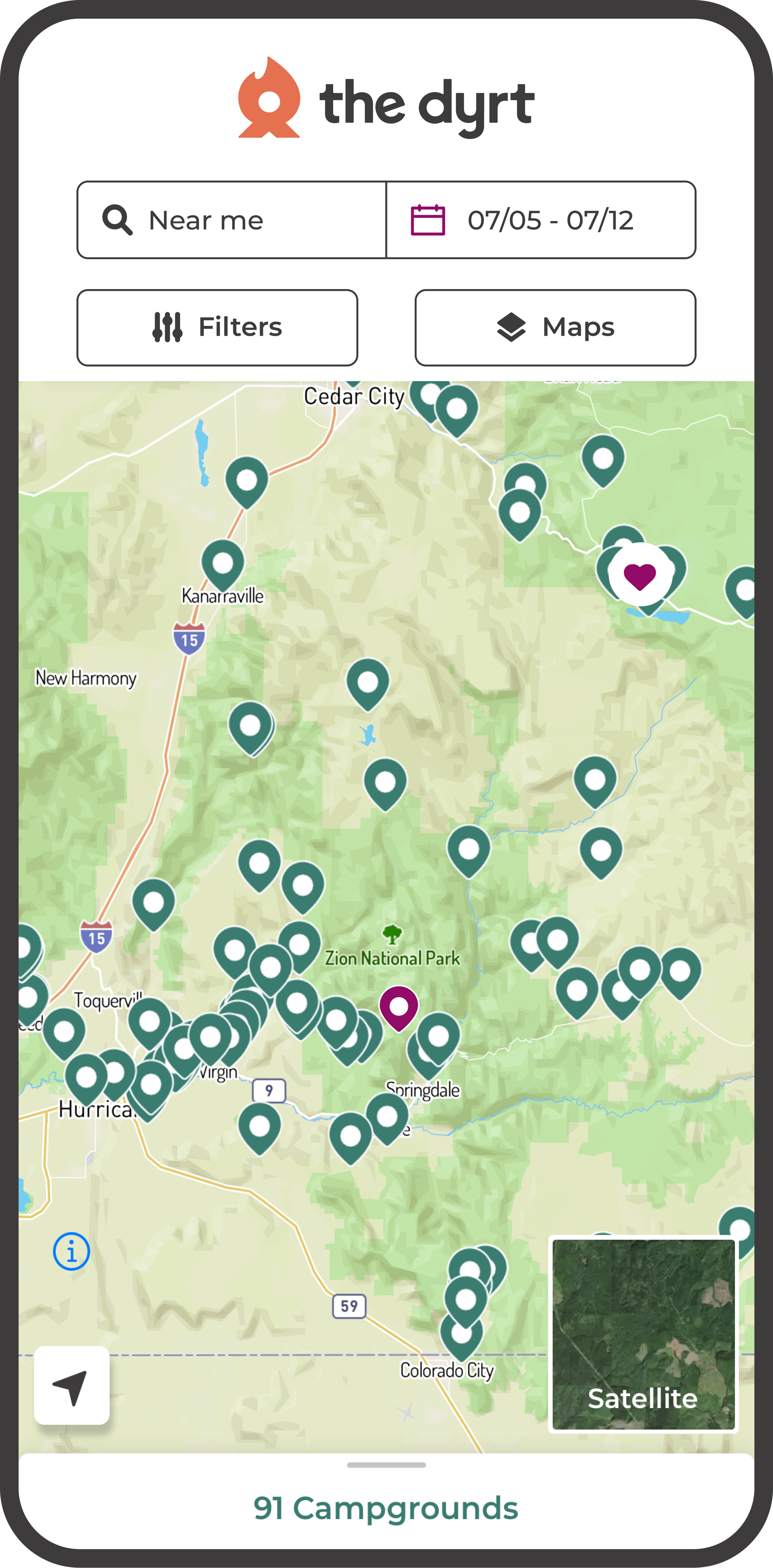
The Dyrt is the #1 camping app in the US, over 44,000 campgrounds, a million-plus user reviews, and a commission-free booking model that sets it apart from other players in the space. I joined as Sr. Product Designer right as the company closed its Series A-III funding, brought on to build something that didn't really exist yet: a real tool for campground owners and managers to run their listings.
There was no spec waiting for me. No documented requirements, no existing design system, just a handful of unfinished tools that didn't match the rest of the app. I built Manager Portal from a blank page, running a competitive audit against other property management tools on the market and looking at how marketplace platforms handle the host or manager side of things, resolving all of it into something a campground owner could actually use without getting lost in a wall of settings.
Alongside that, I saw the same inconsistency creeping across Manager Portal, the consumer app, and everything in between, so I built the case for a shared design system. That became S'mores, a component library I organized and maintained with a small team, including an illustrator whose iconography ended up across the whole product.
Five months into the work, The Dyrt was named Apple's App of the Day, the first camping app ever to get that placement, selected out of two million-plus apps. I'd been working across both the manager-facing tools and the consumer surfaces S'mores fed into, so that recognition reflects on the work, even without a Manager Portal-specific metric to point to.
Keep reading below for the full story





Design Problems
No requirements, no system, no starting point
When I joined, the tools campground owners had access to were unfinished and inconsistent with the rest of The Dyrt's brand. There was no documentation to inherit and no existing pattern for what a management portal at The Dyrt should even look like. I was building the thing and figuring out what it needed to be at the same time.
A pile of feature requests without a flow
Leadership had a long list of what they wanted a campground owner to be able to do. What that list didn't have was any sense of how those features should actually work together for someone managing a real campground day to day. Turning a feature list into a usable product meant running every request through the lens of what the user actually needed, not just building what was asked for as it was asked for.
Inconsistency creeping across the whole product
Manager Portal, the consumer app, and everything in between were drifting further apart the more each one got built out on its own. Nothing tied them together visually or structurally, and that gap was only going to get wider without something to hold it in place.
Challenges
Bringing structure to a blank page
With nothing to inherit, I ran a competitive audit of campground and property management tools already on the market, and looked at how other marketplace platforms handle the host or manager side of things. That gave me a real frame of reference for what a management portal needed to do, which I combined with leadership's specific requests to shape Manager Portal's actual feature set and flow.

Bringing structure to a blank page
With nothing to inherit, I ran a competitive audit of campground and property management tools already on the market, and looked at how other marketplace platforms handle the host or manager side of things. That gave me a real frame of reference for what a management portal needed to do, which I combined with leadership's specific requests to shape Manager Portal's actual feature set and flow.
Resolving requests into a usable product
Leadership wanted a lot of functionality surfaced, understandably, they had a real business to run. My job was translating that into something a campground owner could sit down and use without wading through a wall of options, applying UX principles to figure out what mattered most on any given screen and what could live one level deeper.
Proposing a system nobody had asked for
S'mores wasn't a top-down mandate. I was the one who kept running into inconsistency across design reviews and made the case internally to build a shared component system. Once that got buy-in, I recruited a small team, including an illustrator, to help build it out, and I stayed the one responsible for how it was organized, deployed, and maintained.
Pushing tooling the team wasn't ready for
I piloted Ditto to centralize product copy into a single source of truth, and set up GitHub-based version control for my own Sketch files and S'mores. I pitched both for wider team adoption. Neither stuck, the team didn't have the technical background to pick them up, and conceptually they were ahead of where the team was at the time. I used them on my own work regardless.
Solutions
Manager Portal, built around what campground owners actually needed to do
The portal covers the full range of running a listing: managing bookings, sites, and amenities, moderating reviews, communicating with guests, handling payouts, and syncing calendars with outside property management systems. None of it shipped as one big launch. It rolled out continuously over the ten months I was there, screen by screen, as pieces were ready.






S'mores, a system built to hold the whole product together
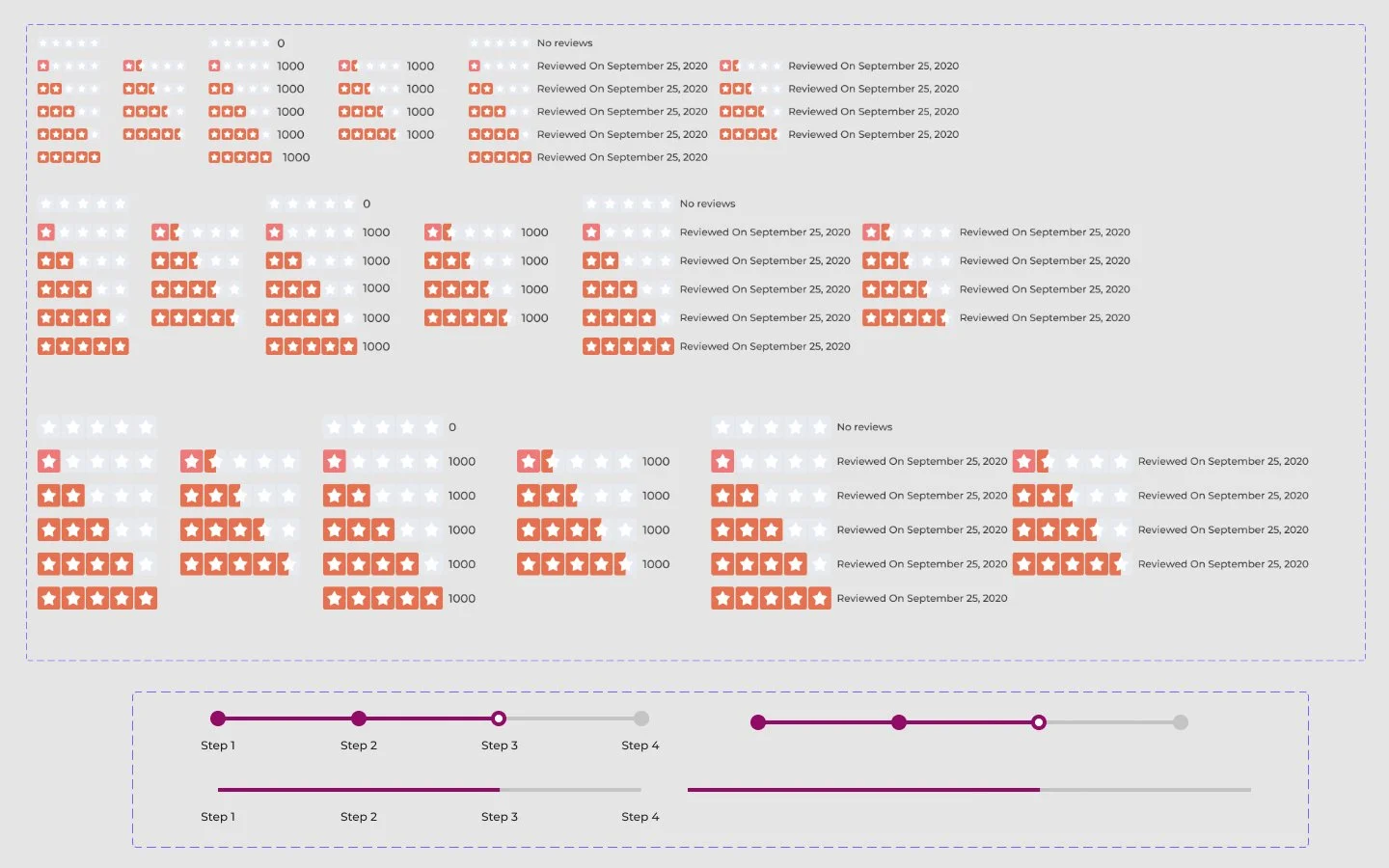
Built in Sketch with a small team of three to four people, S'mores became the shared component library across Manager Portal and the consumer app. I owned how components were organized, deployed, and polished, while others, including an illustrator responsible for a lot of The Dyrt's iconography and imagery, contributed pieces into the system.





Looking for better tools, even when they didn't land
Alongside the actual design work, I was experimenting with how the team worked. Ditto centralized copy across mockups into one searchable source of truth instead of copy scattered across files. GitHub gave Sketch files real version control instead of the usual mess of manually-named file versions. Both were the right instinct, even if the team wasn't ready to adopt them yet.
Results
Apple's App of the Day
Five months into my time at The Dyrt, the app was named Apple's App of the Day, the first camping app ever selected for that placement, chosen out of over two million apps in the App Store. I was working across both Manager Portal and the consumer-facing surfaces S'mores fed into during that window, so while I can't point to a Manager Portal-specific number behind that recognition, the work was part of what that placement reflected.

#1 camping app in the US,
A position The Dyrt held throughout my time there and has continued to hold.
No internal metrics survive from this period
I don't have adoption numbers, support ticket data, or campground-owner satisfaction scores to point to for Manager Portal specifically, and I want to be upfront about that rather than imply otherwise. What I can speak to directly is building the thing itself: taking a set of disconnected, unfinished tools and a list of feature requests with no shared structure, and turning it into an actual product or campground owners to run their business on, built on a design system that held the rest of the product together while I was there.