
ebay motors

Overview
Context
Buying parts for your car online is basically an act of faith. You're trusting that the part you're looking at will actually work with the vehicle you drive, and if you've ever shopped for tires, you know that problem gets even bigger. Tires are heavy, they're complicated, and almost nobody wants to install them on their own. So really, the hard part was never getting someone to buy tires online. The hard part was everything that had to happen after they clicked buy.
Only 0.02% of tire sales on eBay included installation. Not two percent. Not two-tenths of a percent. Two hundredths of one percent, meaning almost nobody who bought tires also bought the service to get them put on. Other tire retailers get somewhere between 10-15% of buyers to also book installation. eBay had technically built a way to buy it, but almost nobody could actually find it or finish it.
My Role
What I designed
The fitment badge system and single input layer for Guaranteed Fit, surfacing an existing fits/doesn't-fit/might-fit compatibility model consistently across the buying journey
The scheduling calendar, window model, and flow architecture for Tire Installation
What I led
Cross-functional alignment with Search, product grids, PDP, checkout, and the buy box to secure page placement for fitment, a months-long negotiation that ended in a real compromise, not a full win
Partner strategy across SimpleTire and CarAdvise
Mentorship of a newer designer
Sustained ownership of both initiatives in parallel
I led two connected initiatives for eBay's Parts & Accessories team: Guaranteed Fit, which solved for fitment trust, and Tire Installation, which solved for what happens after checkout. Same underlying thesis: close the trust gap, and the business results follow.
Buying auto parts online isn’t hard. Trusting they’ll fit your car is.
eBay's Parts & Accessories team had a trust problem. Buyers couldn't tell if a part would fit their car, and even after buying tires, there was no reliable way to actually get them installed. I led design on both fixes, Guaranteed Fit and Tire Installation, as one continuous engagement over two-plus years, not two separate projects handed to me in sequence.
My contribution went beyond the screens. I negotiated page placement with Search, product, checkout, and buy box teams, each with a real, well-earned instinct to protect their space, and made the case for why automotive fitment doesn't play by the same rules as the rest of the platform. I did this while running both initiatives in parallel and mentoring a newer designer, work eBay recognized with two Spot Awards in the same year.
The proof: returns dropped 9%, GMB grew 0.86%, finder completion rose 12%.
Keep reading below for the full story, the ambiguity, the trade-offs, the systems thinking, and the actual screens
Design Problems
Guaranteed Fit
eBay's fitment tools existed, but they were buried behind price, reviews, and seller ratings, so customers were deciding on a part before ever learning if it fit their vehicle.
Entering accurate vehicle information was its own hurdle. A lot of people don't actually know their own vehicle's year, especially in the UK, and plenty will guess something close rather than admit they're not sure.
Tire Installation
The old experience broke down at nearly every checkpoint, Search, checkout, and after the sale. The only way to know installation was even possible was to luck into a listing where the seller happened to offer it. Even a buyer who made it through checkout just got a vague "someone will contact you" instead of a confirmed time, and once the order was placed, there was no way to track or manage what they'd bought. The few info pages that did exist didn't even agree with each other on who was responsible for reaching out, the buyer, the installer, or eBay.
0.02% attach rate. Most buyers never even saw installation was an option.
Awareness
Confidence
People skipped shopping for tires on eBay entirely, not over price, over the logistics.
Trust
eBay's own pages didn't agree on who was responsible for reaching out.
Challenges
Cross-functional alignment
Page placement at eBay's scale is high-stakes, and eBay's design culture defaults to protecting existing layouts, customers are fluent in the current flow, and small changes have a track record of moving purchasing behavior, sometimes by millions. That instinct is a good one almost everywhere on the platform, most categories have flex, a shopper who's a size 9 can consider an 8.5 or 9.5, a shirt that runs small is still wearable. Automotive doesn't have that flex. A part either fits the vehicle or it doesn't, and unlike a shirt you can just re-order, a part that doesn't fit leaves your car broken while you wait on round two, missed work, a missed pickup, a missed appointment. Making that case, not just asking for space, but explaining why automotive plays by different rules, took months and landed at different times with different teams. Search converted fastest and became an internal advocate. Product grids, PDP, and checkout took longer. The buy box never opened up. What we landed on: fitment out of the buy box entirely, in exchange for top-of-page placement on PDPs and a persistent presence in the top bar across search and product grids. Tire Installation faced the same dynamic getting installation badging onto Search results, though by then customer evidence from Guaranteed Fit made the case faster the second time around.
Technical ambiguity
Tire Installation's scheduling was split across two partner integrations, SimpleTire and CarAdvise, with an open question underneath both: build against their live availability API, or build independent logic and treat the partner as a black box. Nobody could answer that yet, not even SimpleTire could confirm how they'd communicate a drop-off time.
Constraints
Phase 1 of Tire Installation had to ship inside a two-week sprint, on top of legacy code that was never built to be fully integrated with the rest of the purchase experience.
1
Tight deadline
Phase 1 had to ship in a two-week sprint, not the months-long release cycle a change like this would normally get.
2
Legacy code
The new experience had to sit on top of legacy systems that were never built to talk to each other, so full integration wasn't possible on day one.
3
Unfinished platform
Installation had to be built on eBay's Value Added Services platform, itself still under construction, not a stable foundation to design against.
4
Protective Search
Search closely guards anything that touches their pages, so getting an installation badge in front of buyers took real, sustained negotiation.
5
No live data
eBay's shop partners had no system to confirm real-time appointment availability, so the design had to work without knowing that in advance.
Shipped anyway
A working calendar, badging, and a confirmation flow, live inside a two-week sprint.
Solutions
For Guaranteed Fit, the core system was a state model, not a screen: a part either fits, doesn't fit, or might fit and needs more information. This is a standard convention across automotive commerce, eBay's backend already had some version of the logic, my job was making it show up consistently and honestly everywhere a customer might see it. That third state carried real weight, the guarantee was literal, if a part carried the badge and turned out not to fit, eBay covered the cost, so a false positive wasn't just a bad experience, it was a bill. Underneath it, a single input layer for vehicle data, year, make, model, trim, was built to work for both first-time buyers and experts, with a VIN shortcut for anyone who didn't need the guided version. Once fitment status was reliable, the badge became a consistent visual system applied everywhere a customer might be deciding on a part.
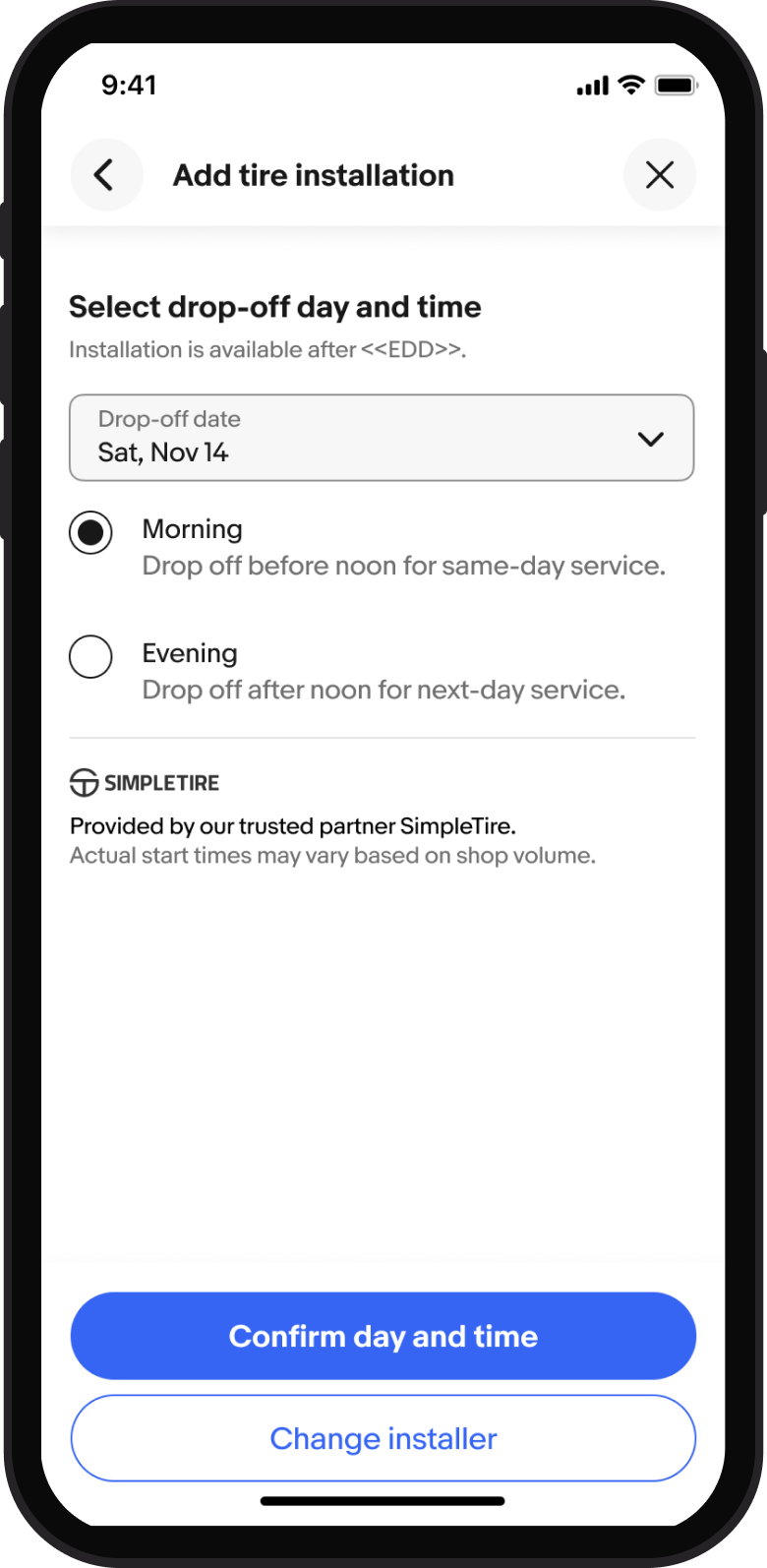
For Tire Installation, I designed a fourteen-day scheduling calendar and a morning/evening window model borrowed from patterns customers already trusted from brick-and-mortar tire shops, built to work no matter which way the API question landed. I also mapped and tested two different flow architectures, installation offered upfront versus added at the end of the purchase, weighing the earlier-is-better instinct against an abandonment risk in areas with no nearby installer coverage.
Screens
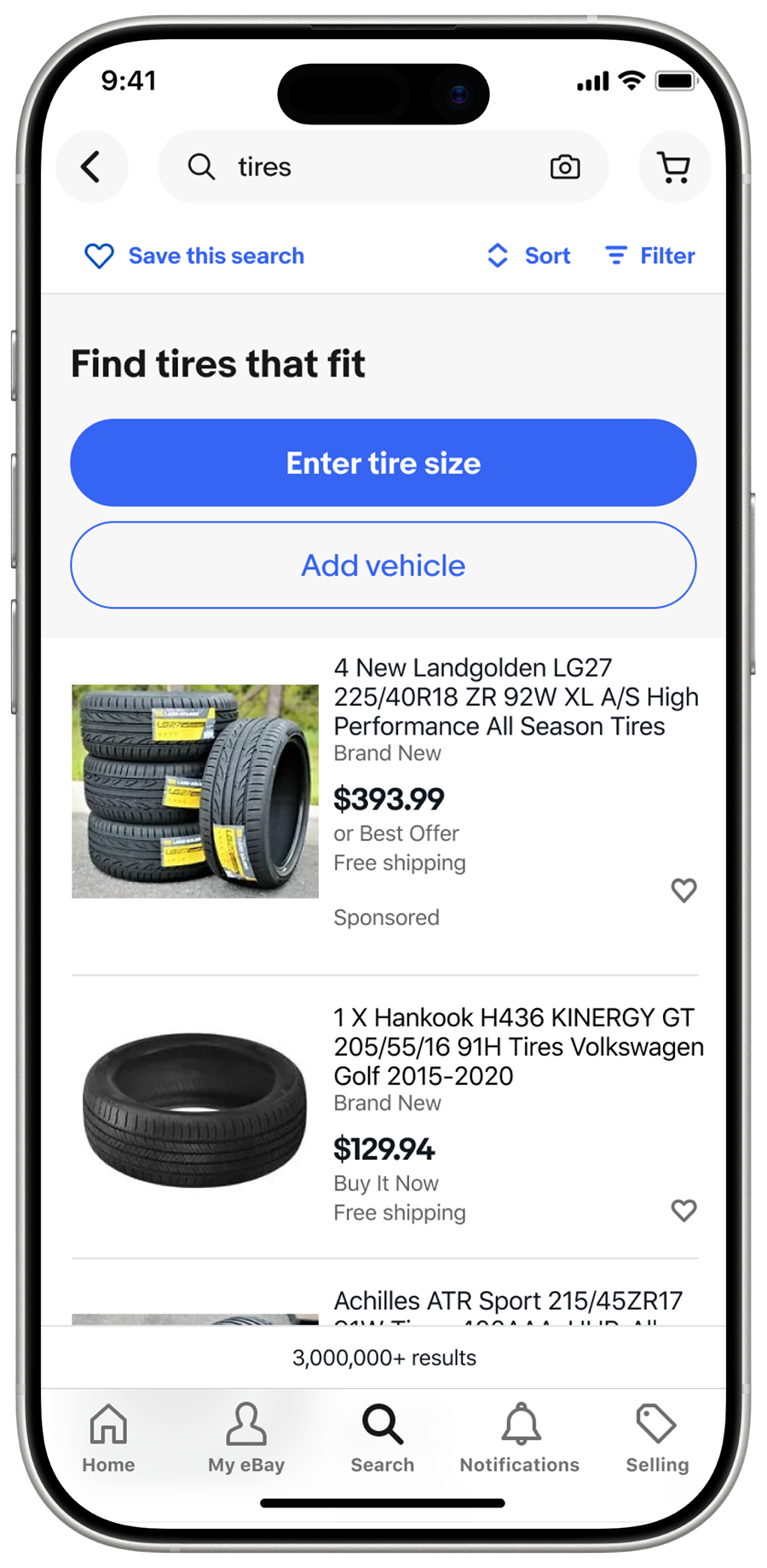
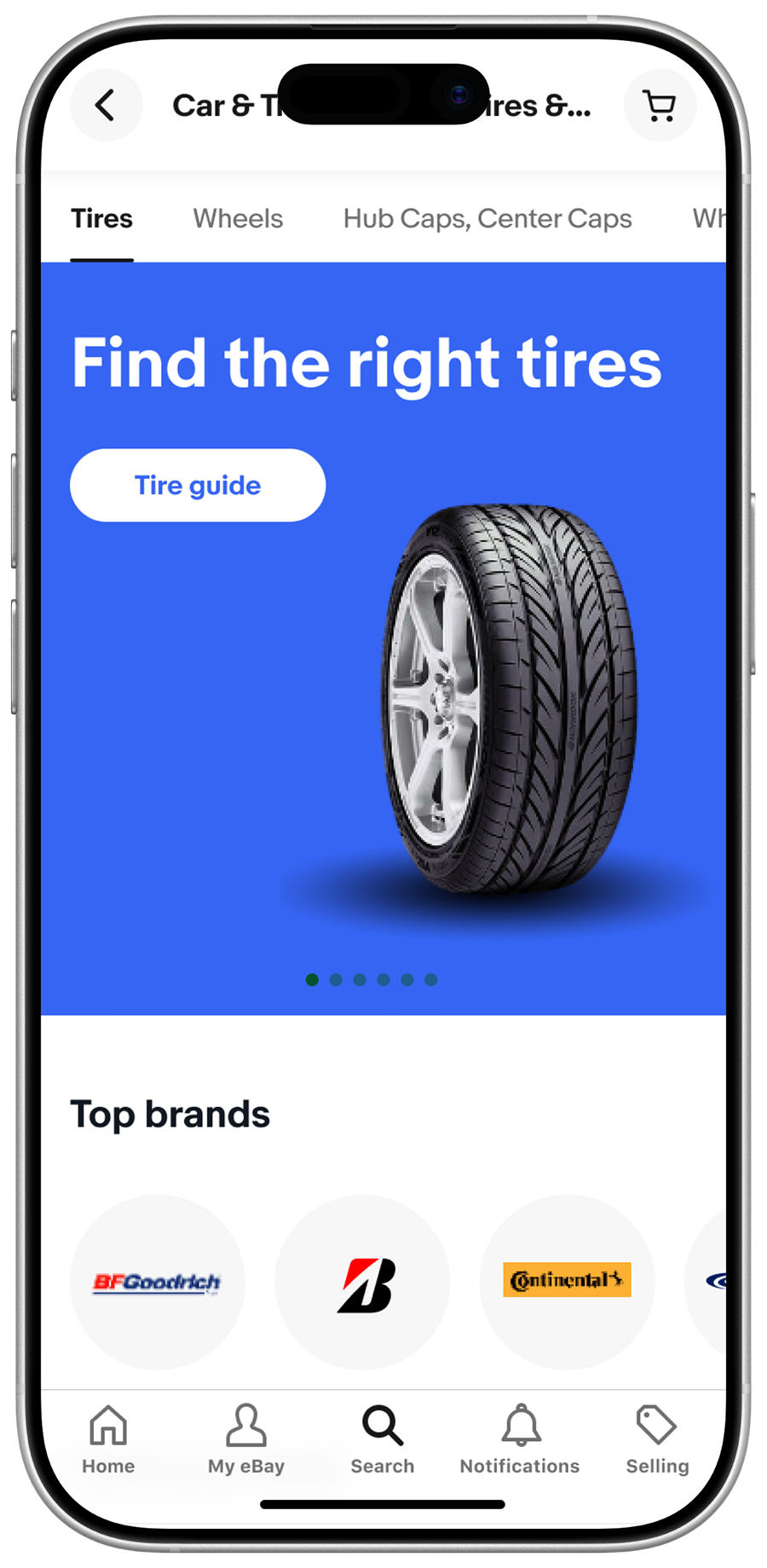
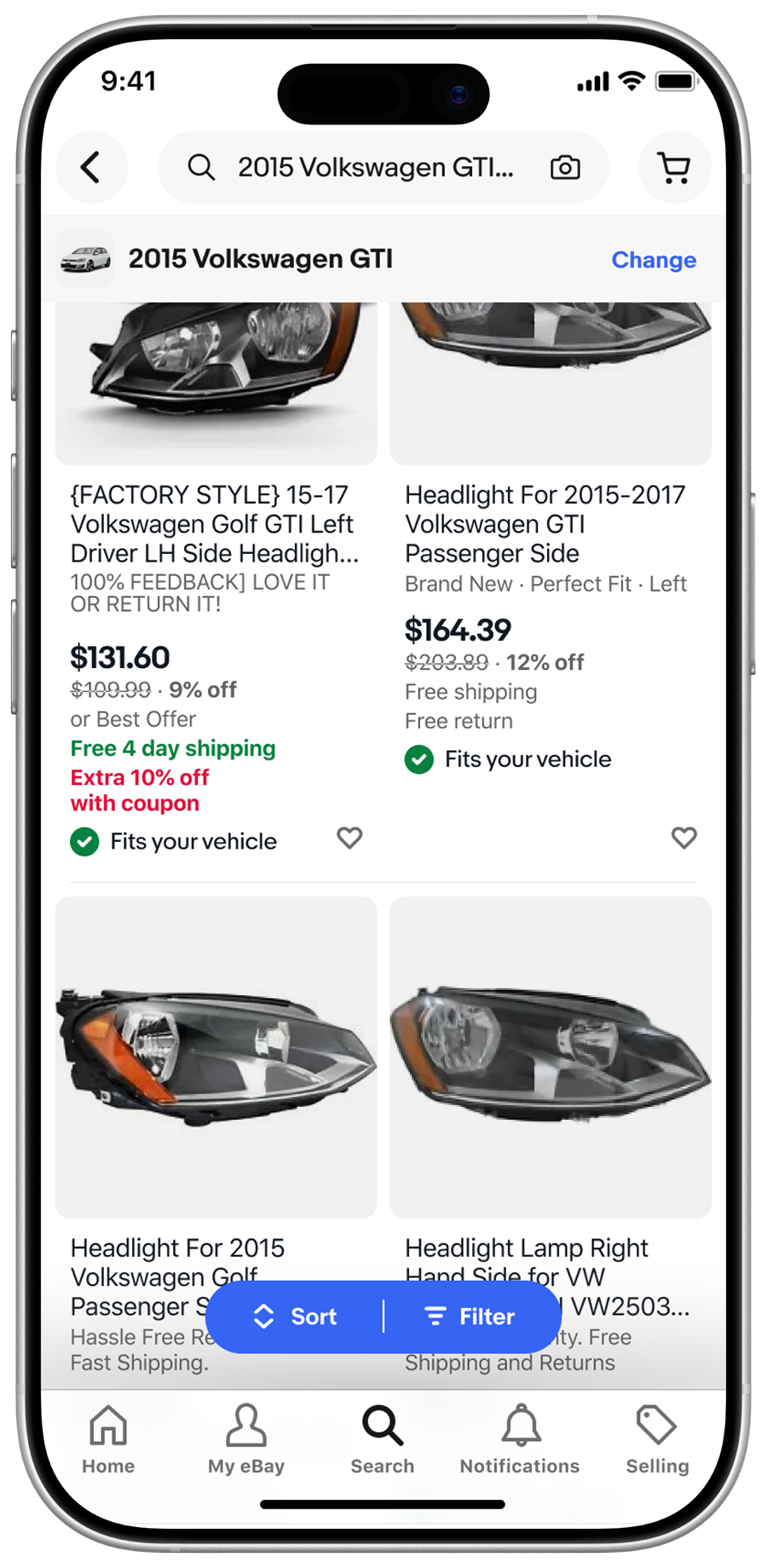
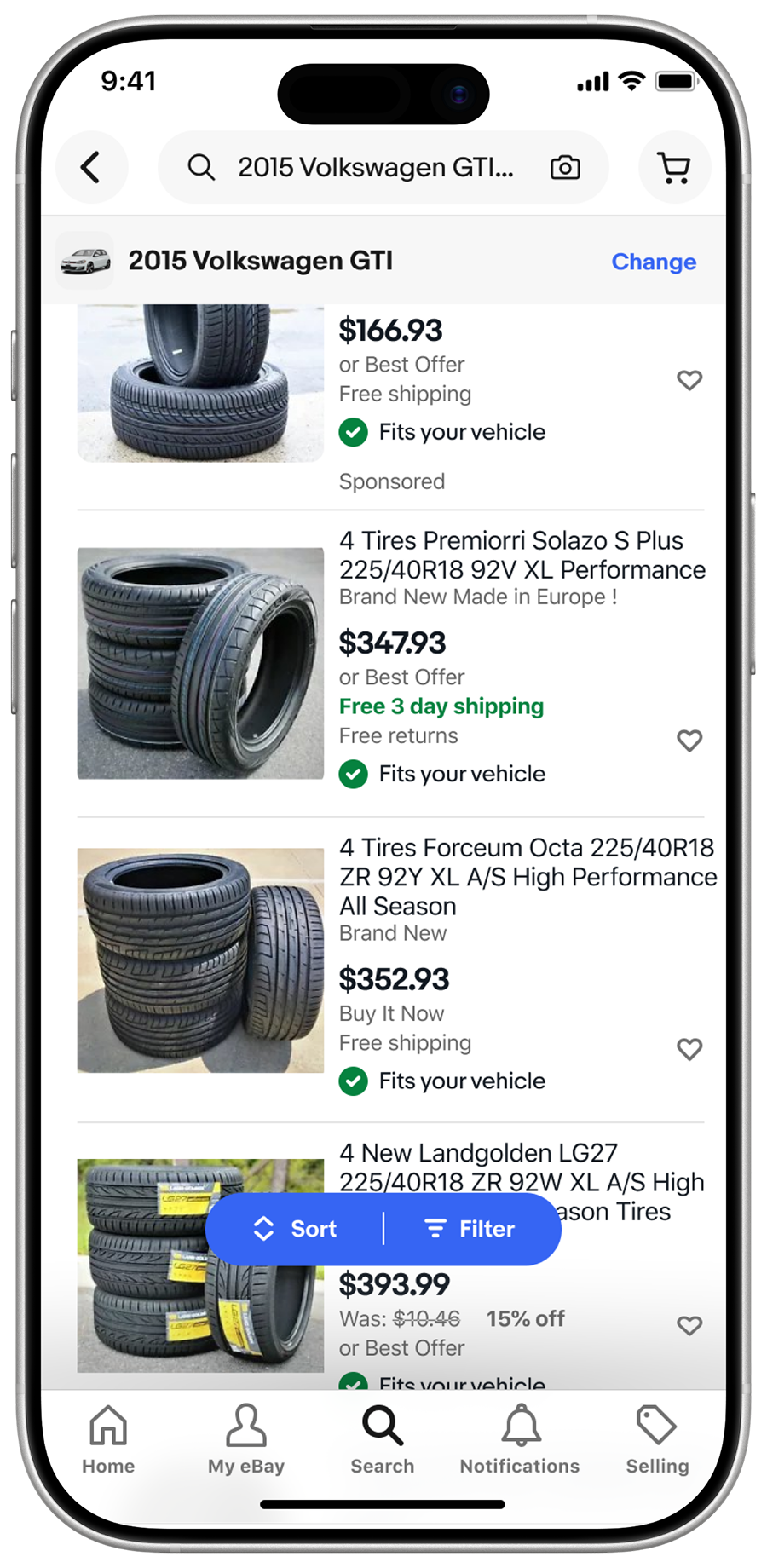
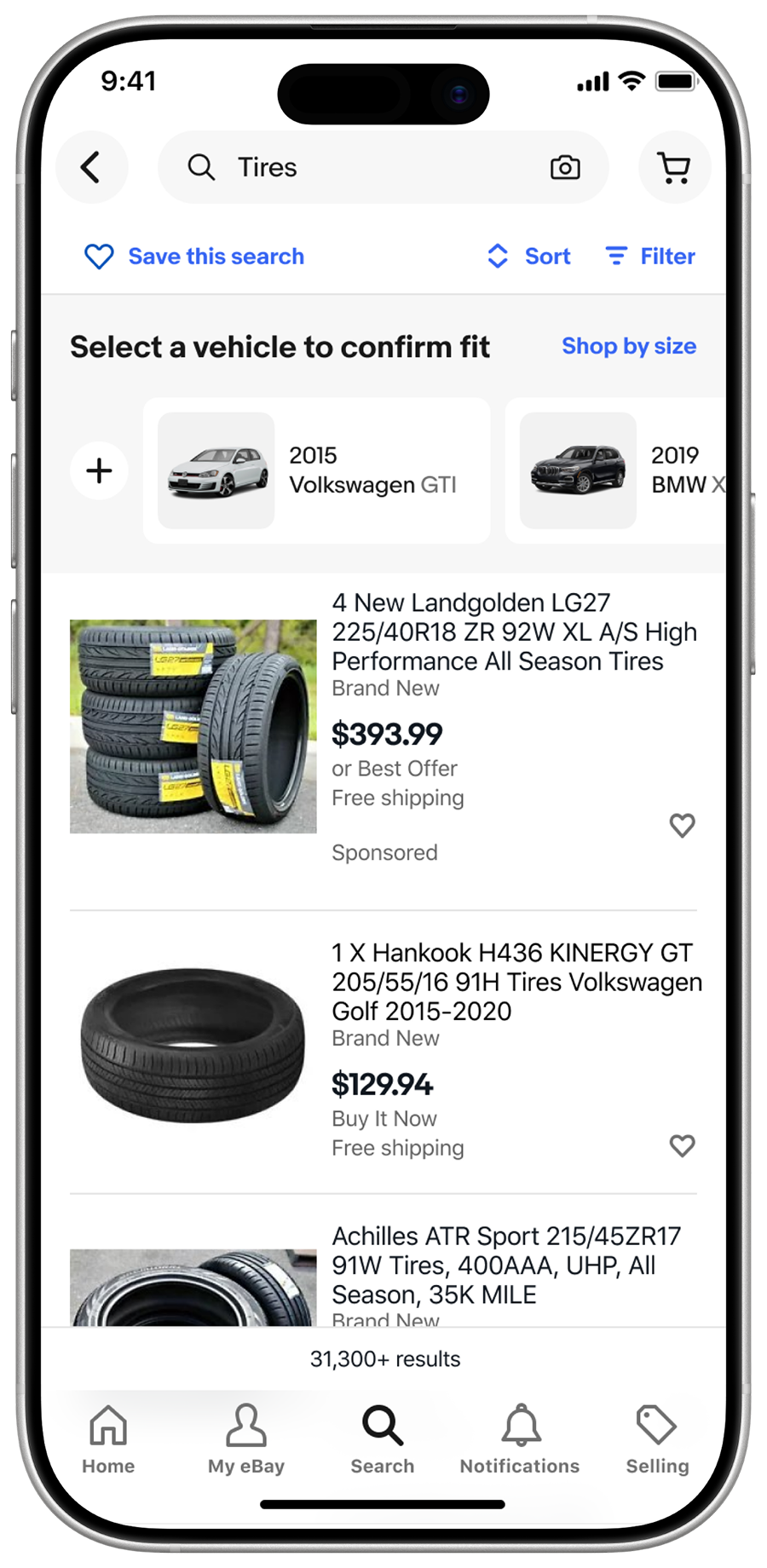
Finder modules live at the top of search results and category browsing pages. They're impossible to miss and call attention to themselves immediately. As you scroll to see more results, the module shrinks to a small bar at the top. It's always there, reminding you to find parts that fit. This pattern exists in both Parts & Accessories and Tires.
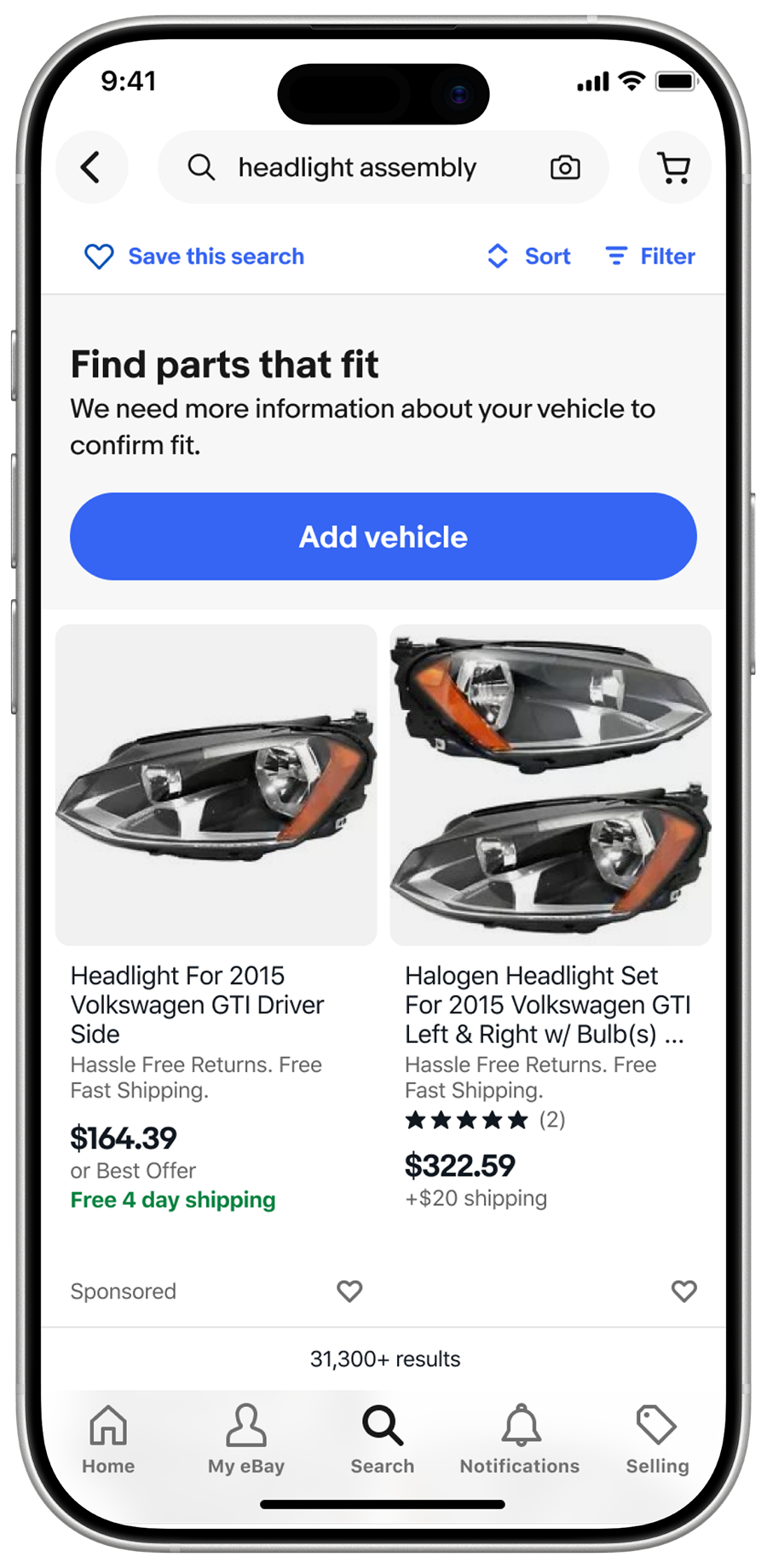
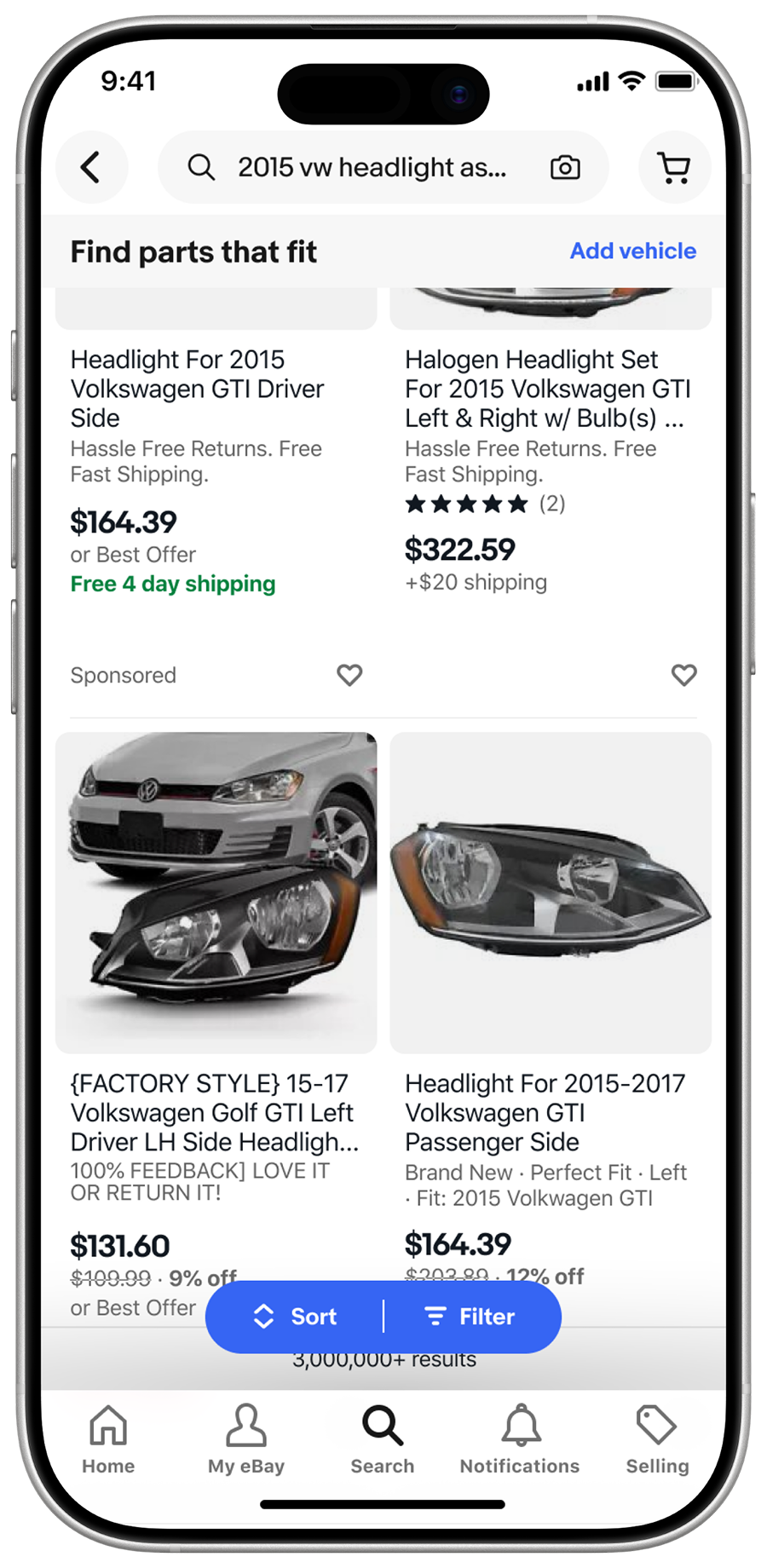
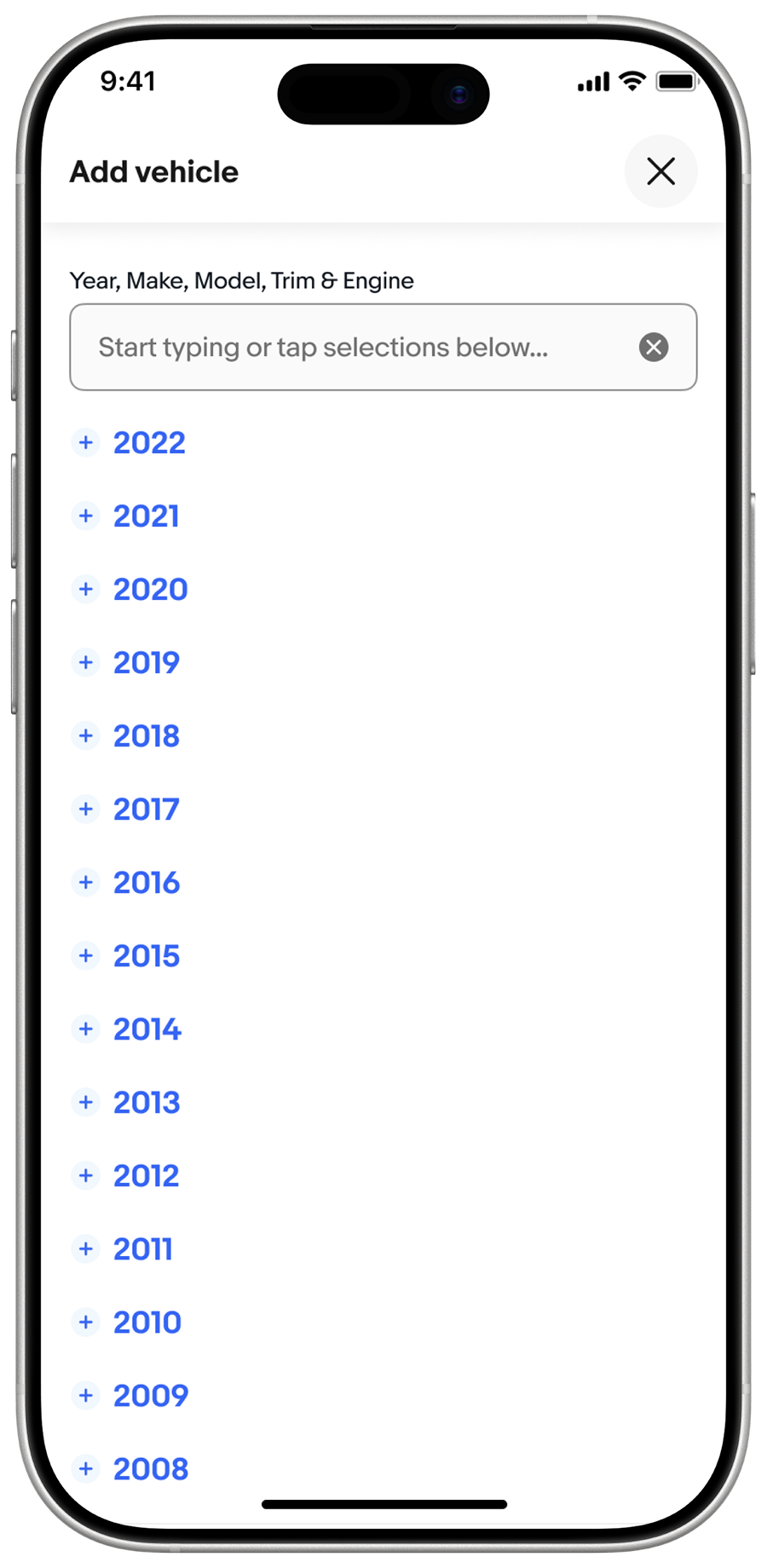
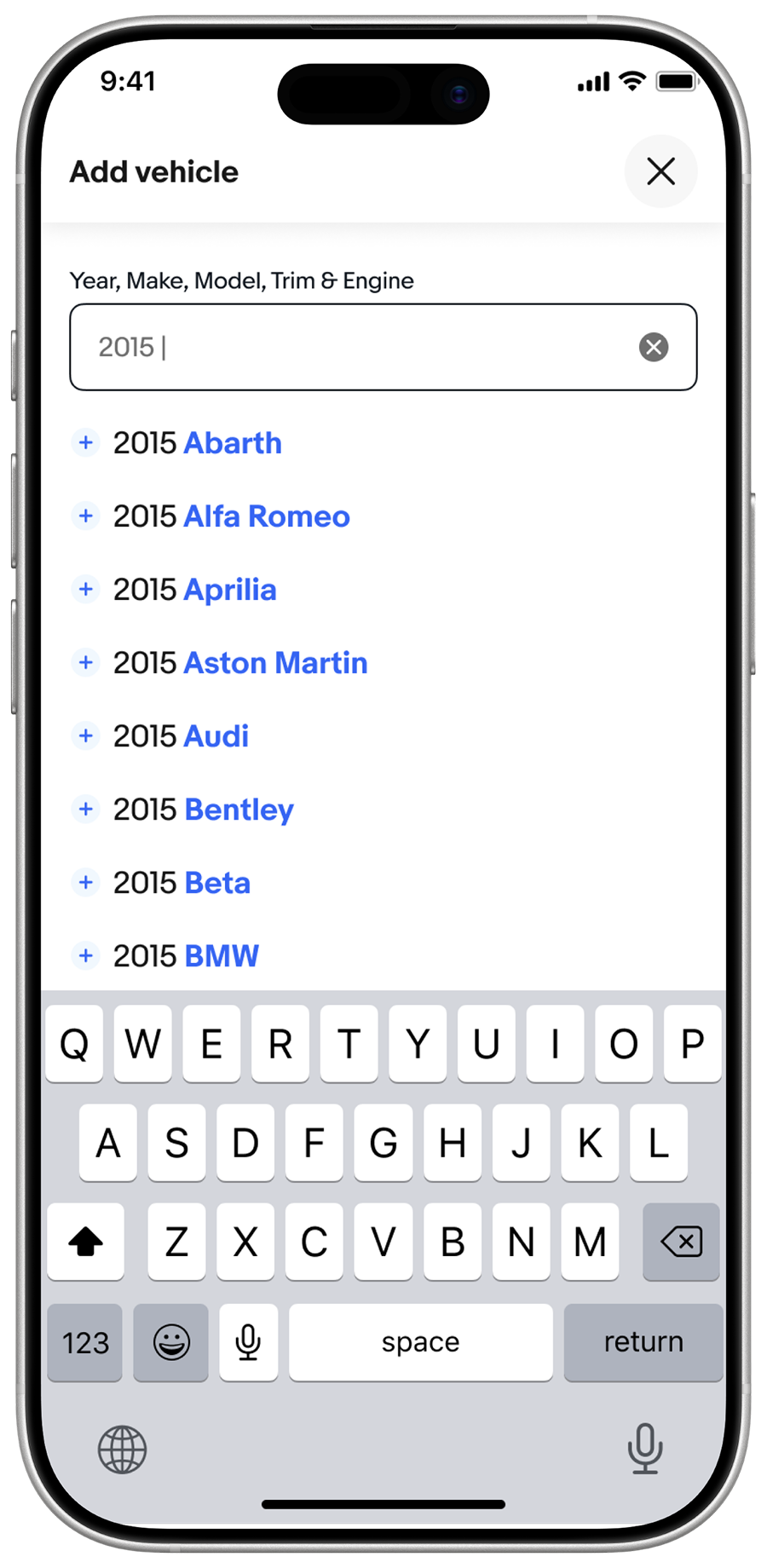
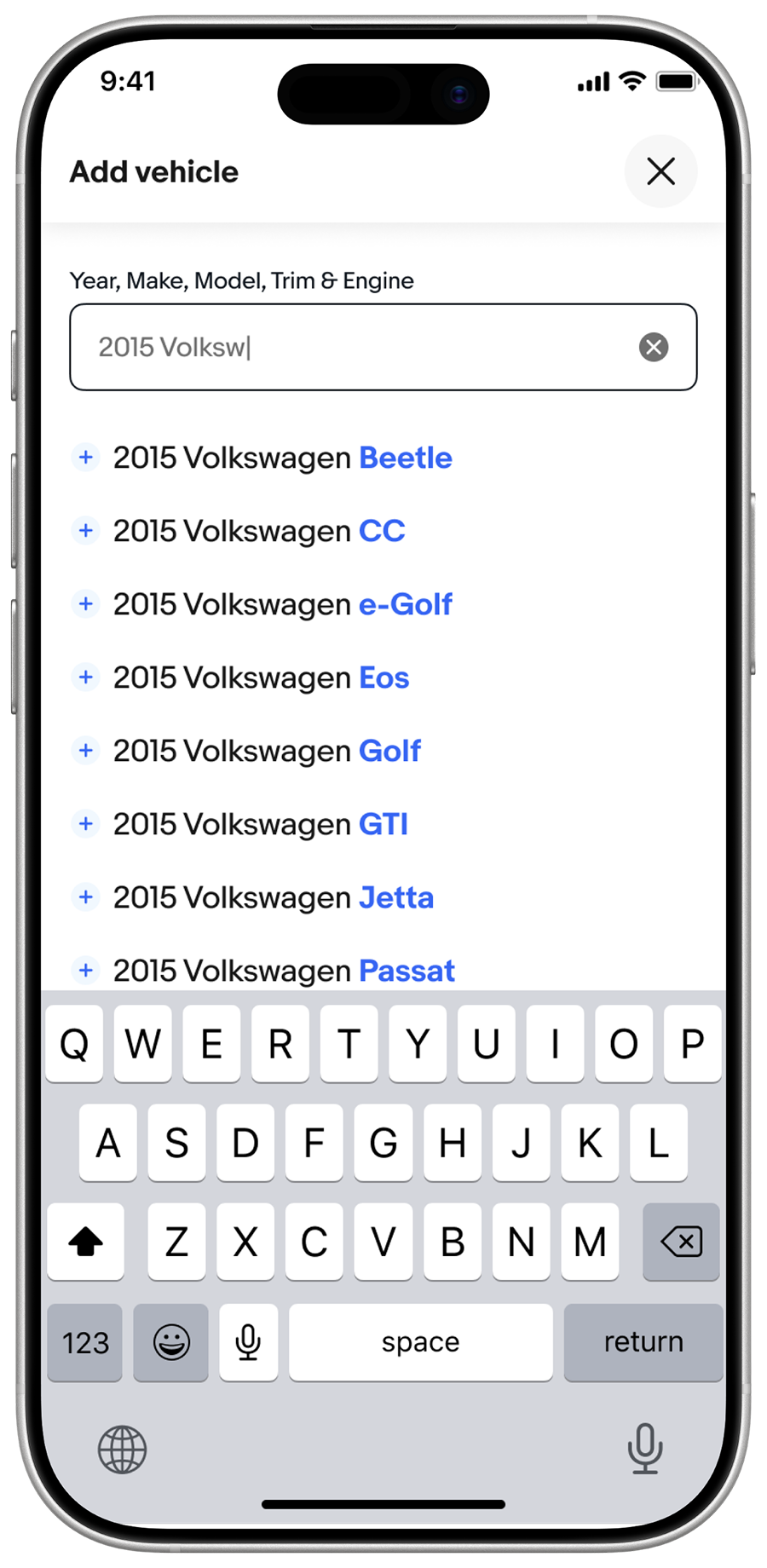
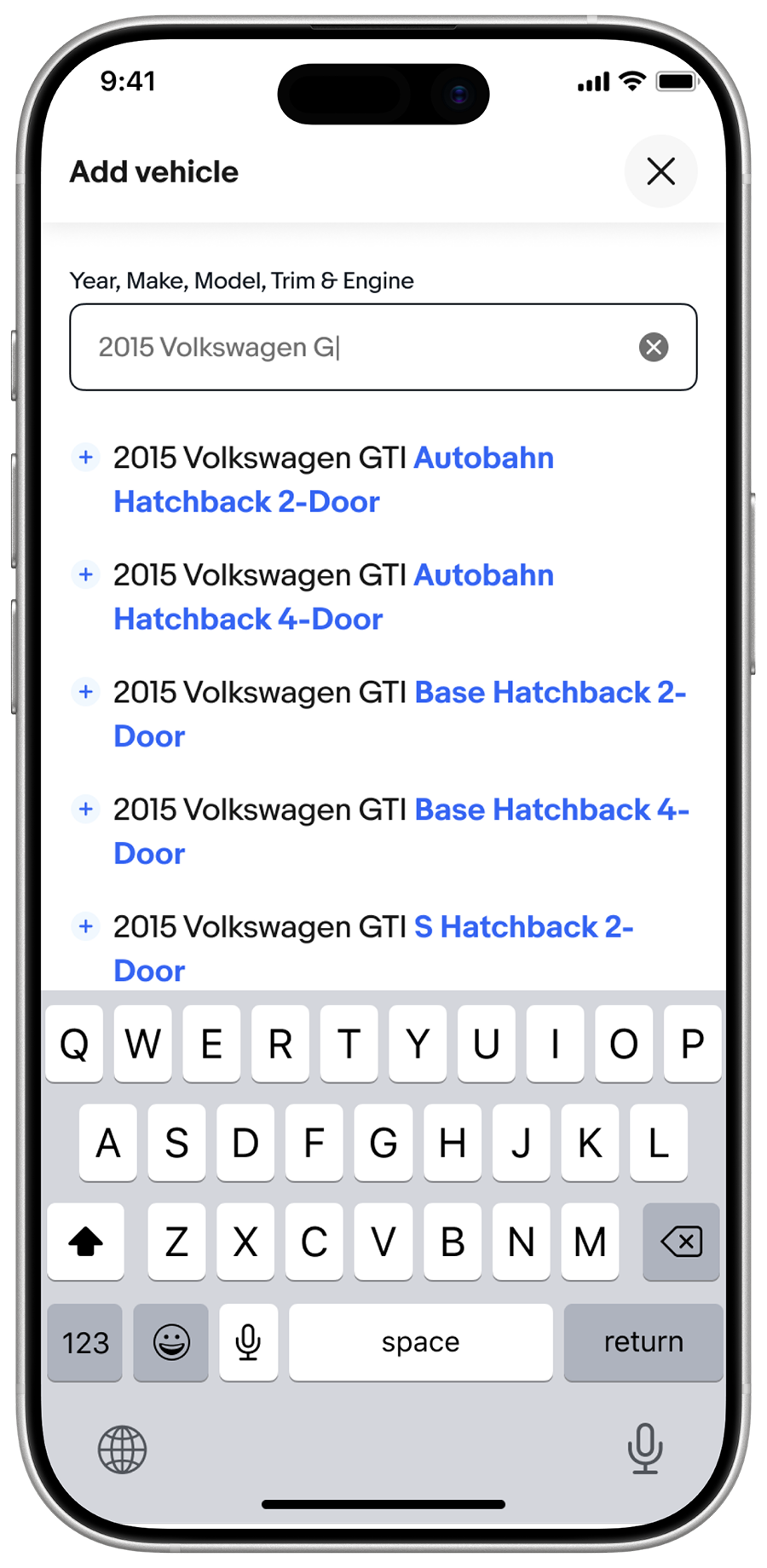
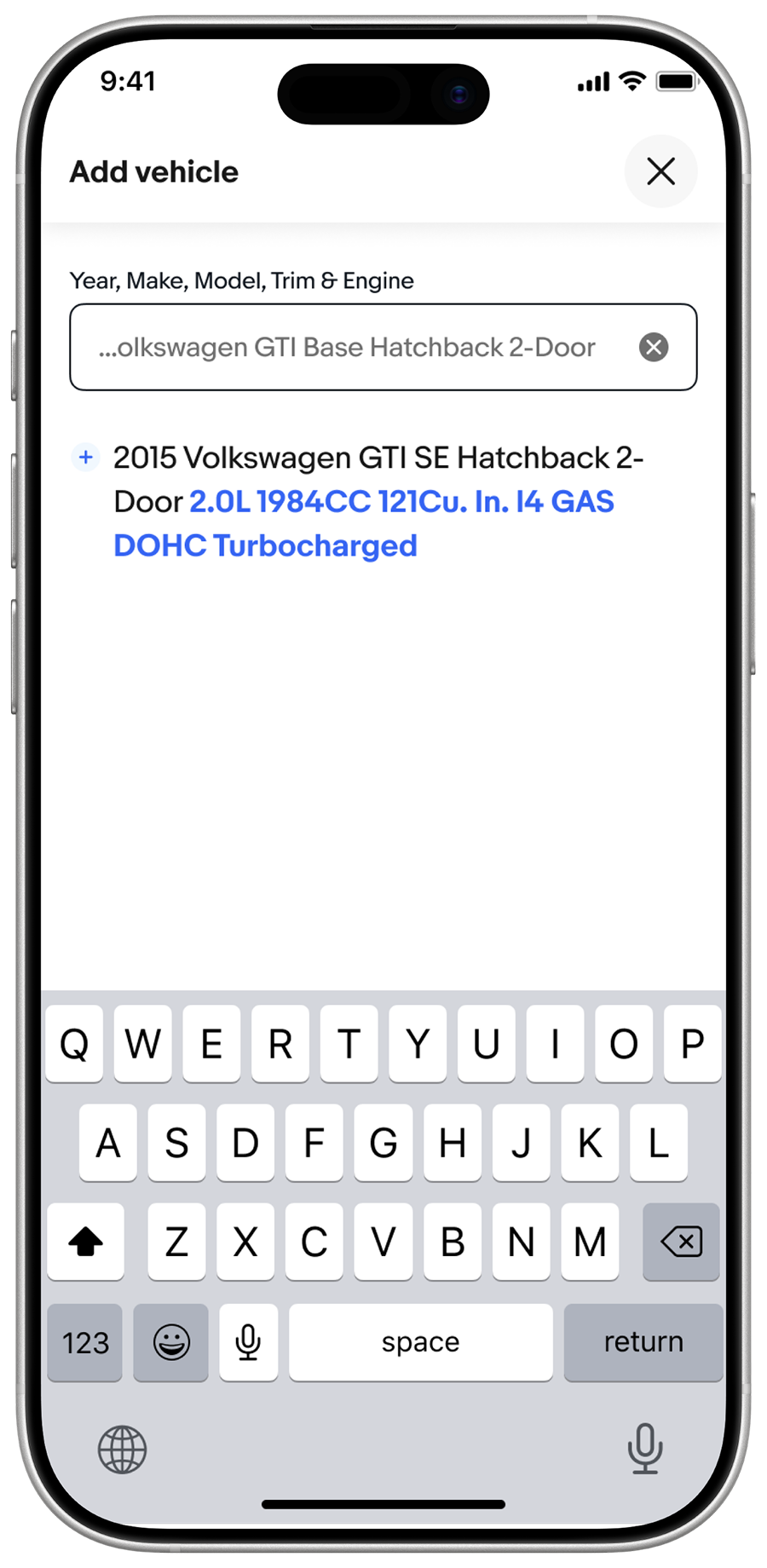
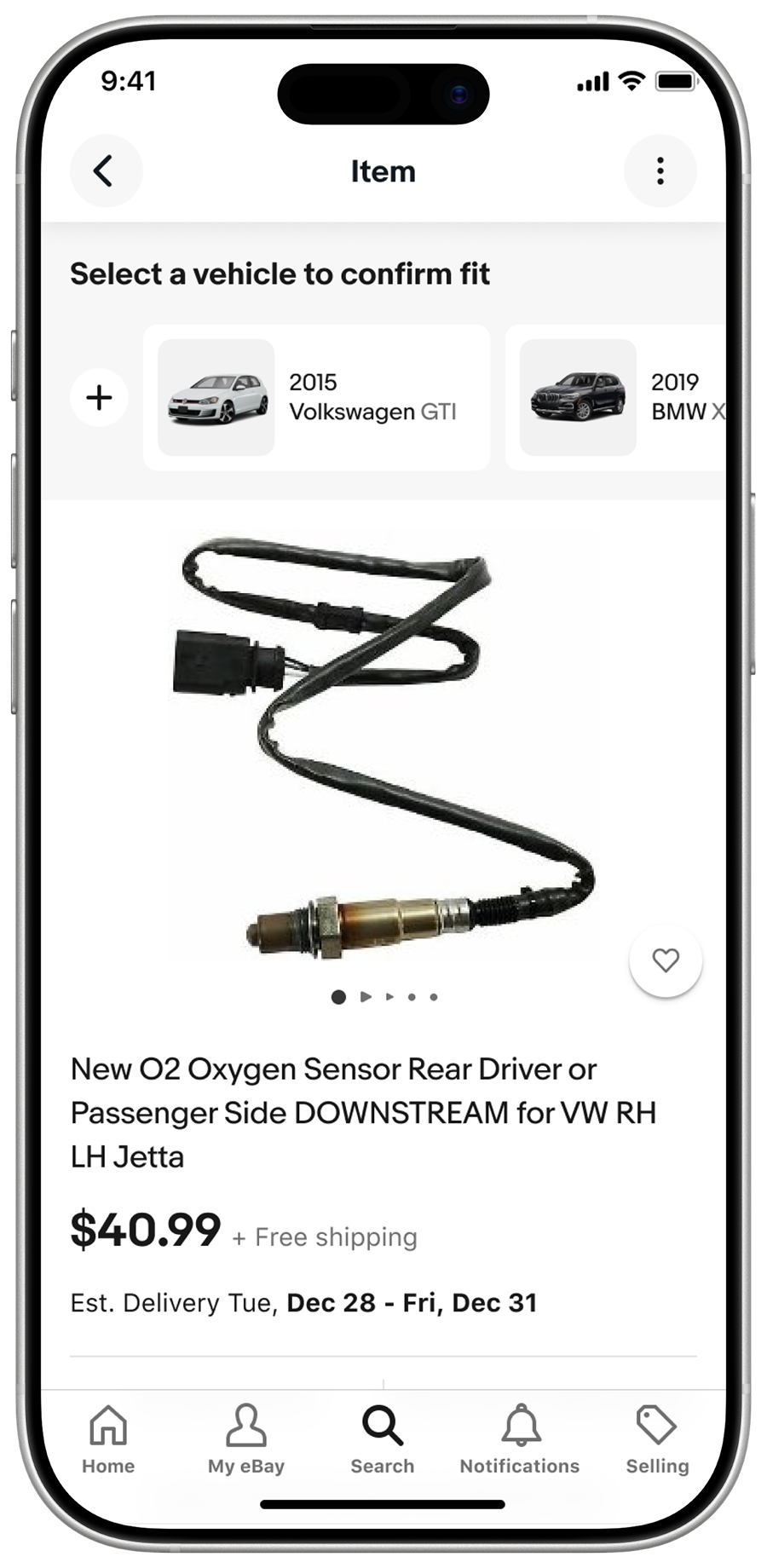
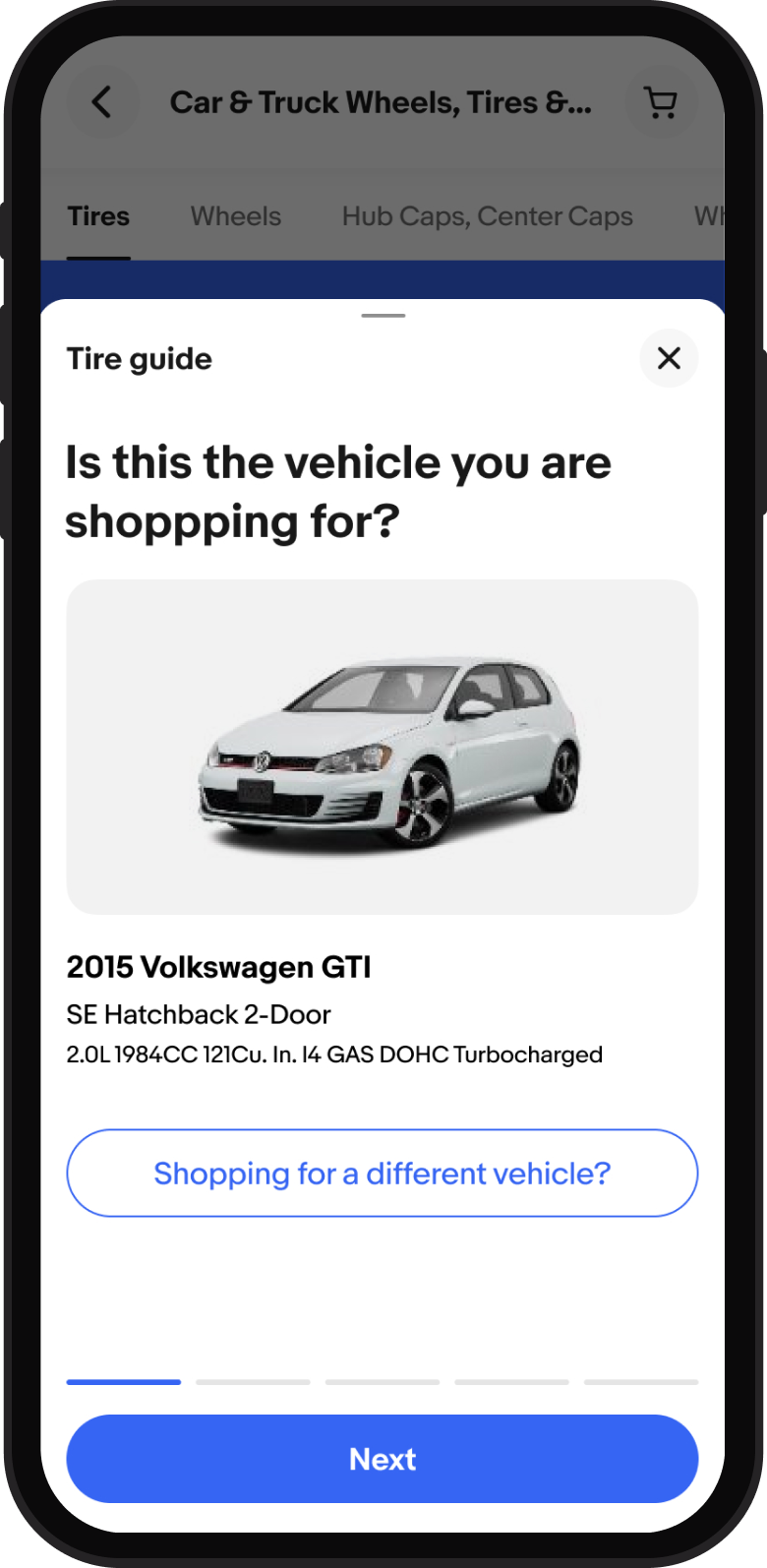
Adding a vehicle is easy using a type-ahead or tap system. You can also filter and narrow down tappable results by typing. Once you've selected your vehicle, it's added to your "Garage." Your saved vehicles are stored with your account and can be edited, changed, or removed.
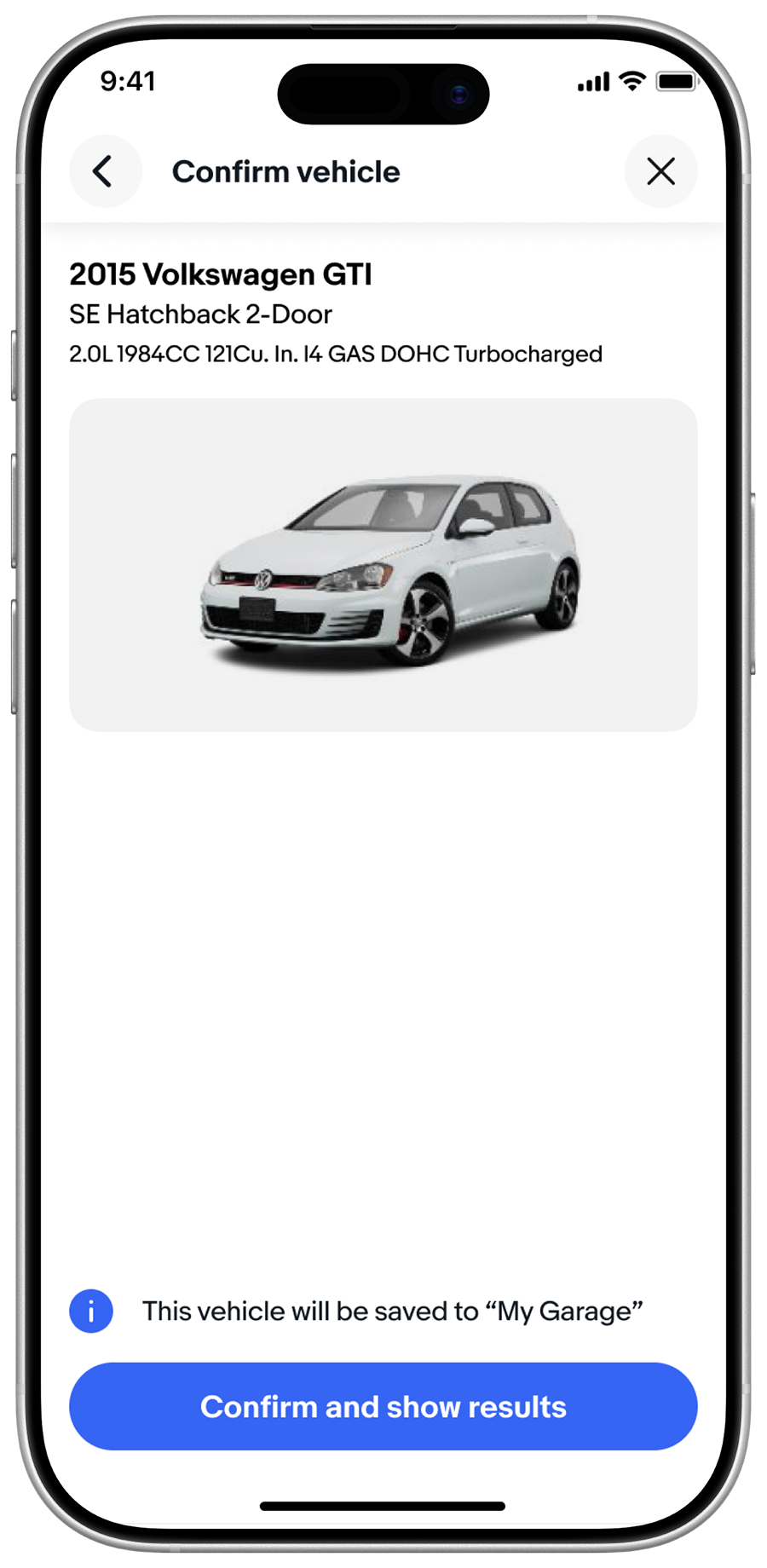
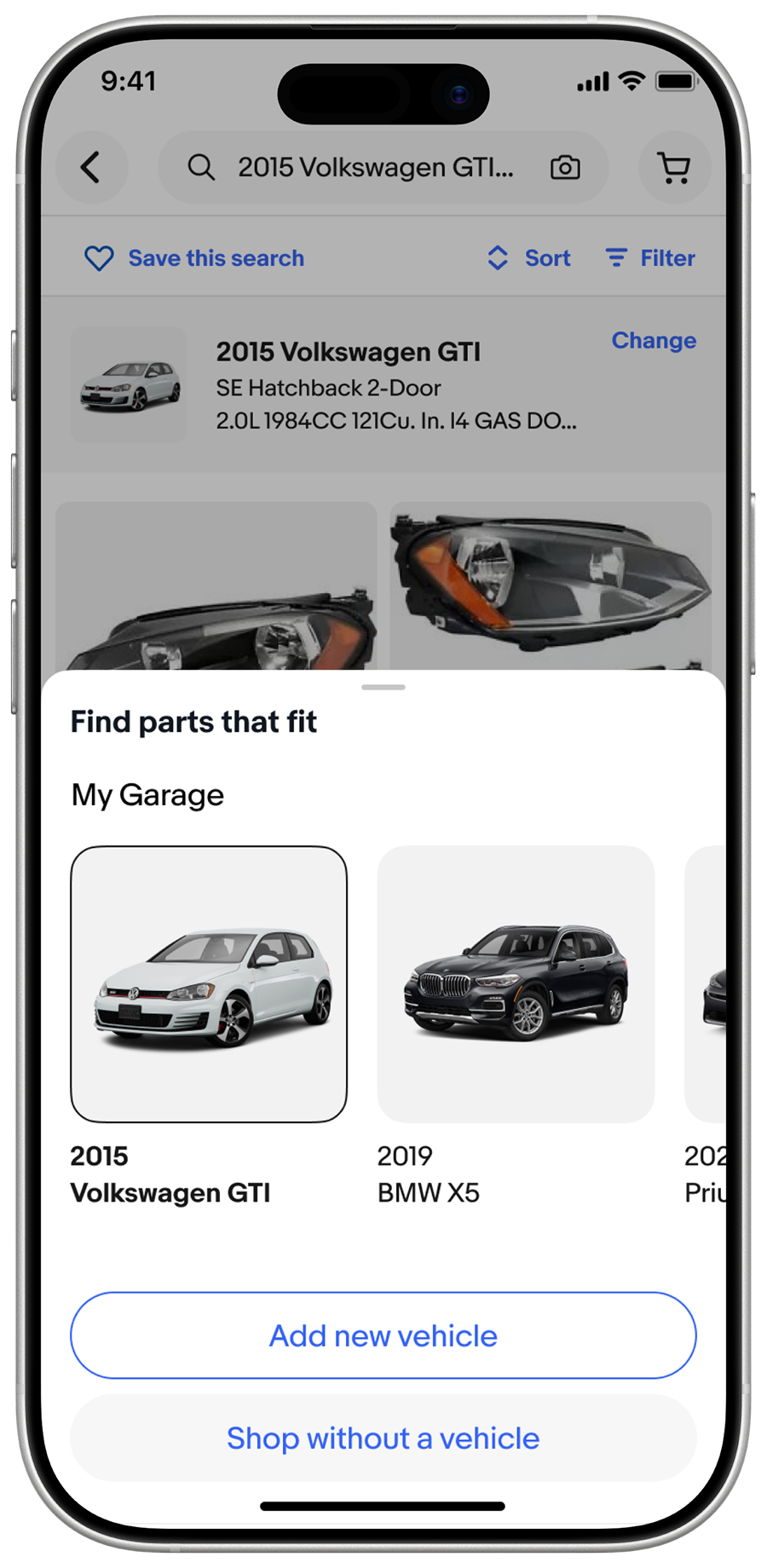
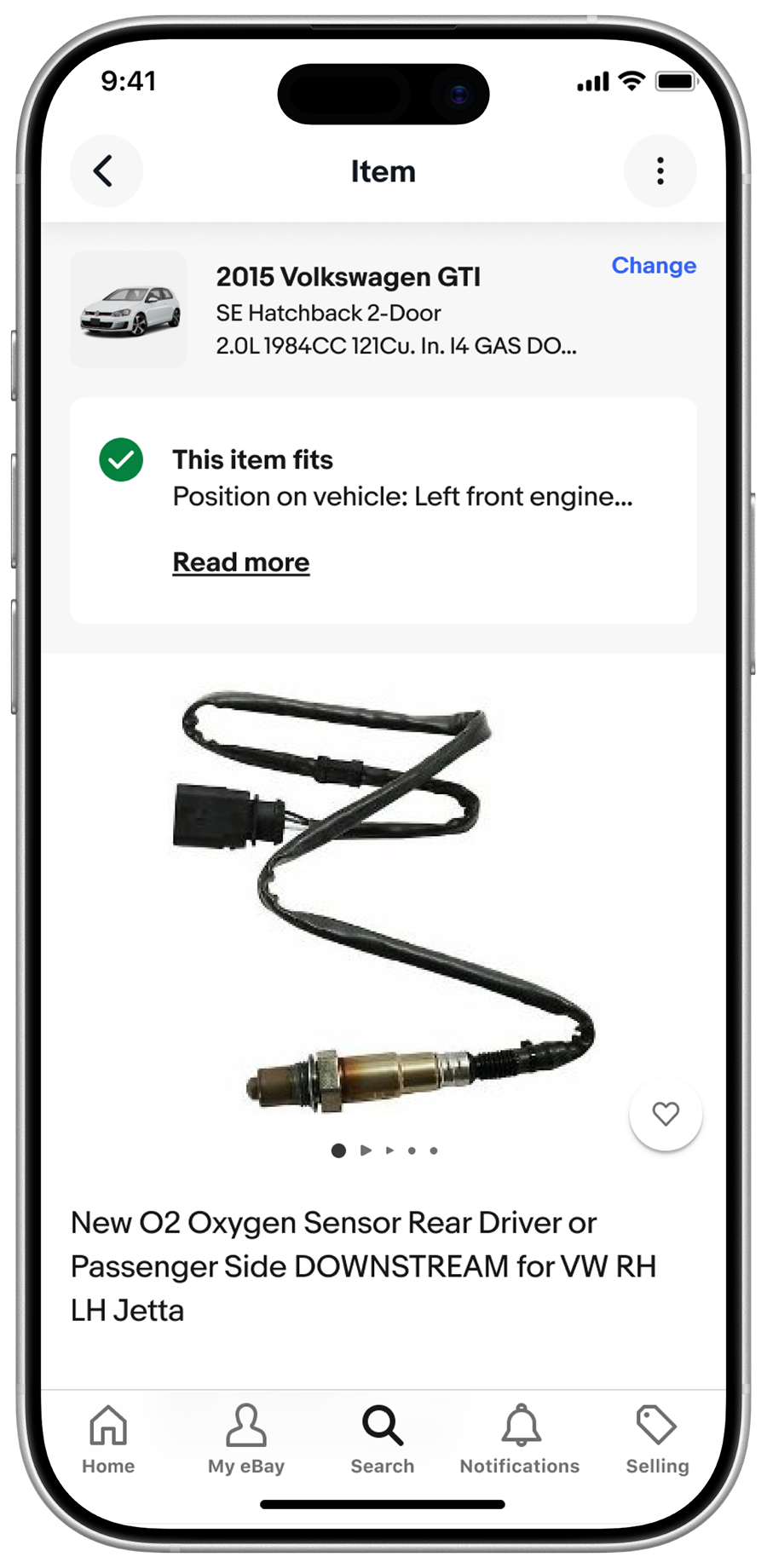
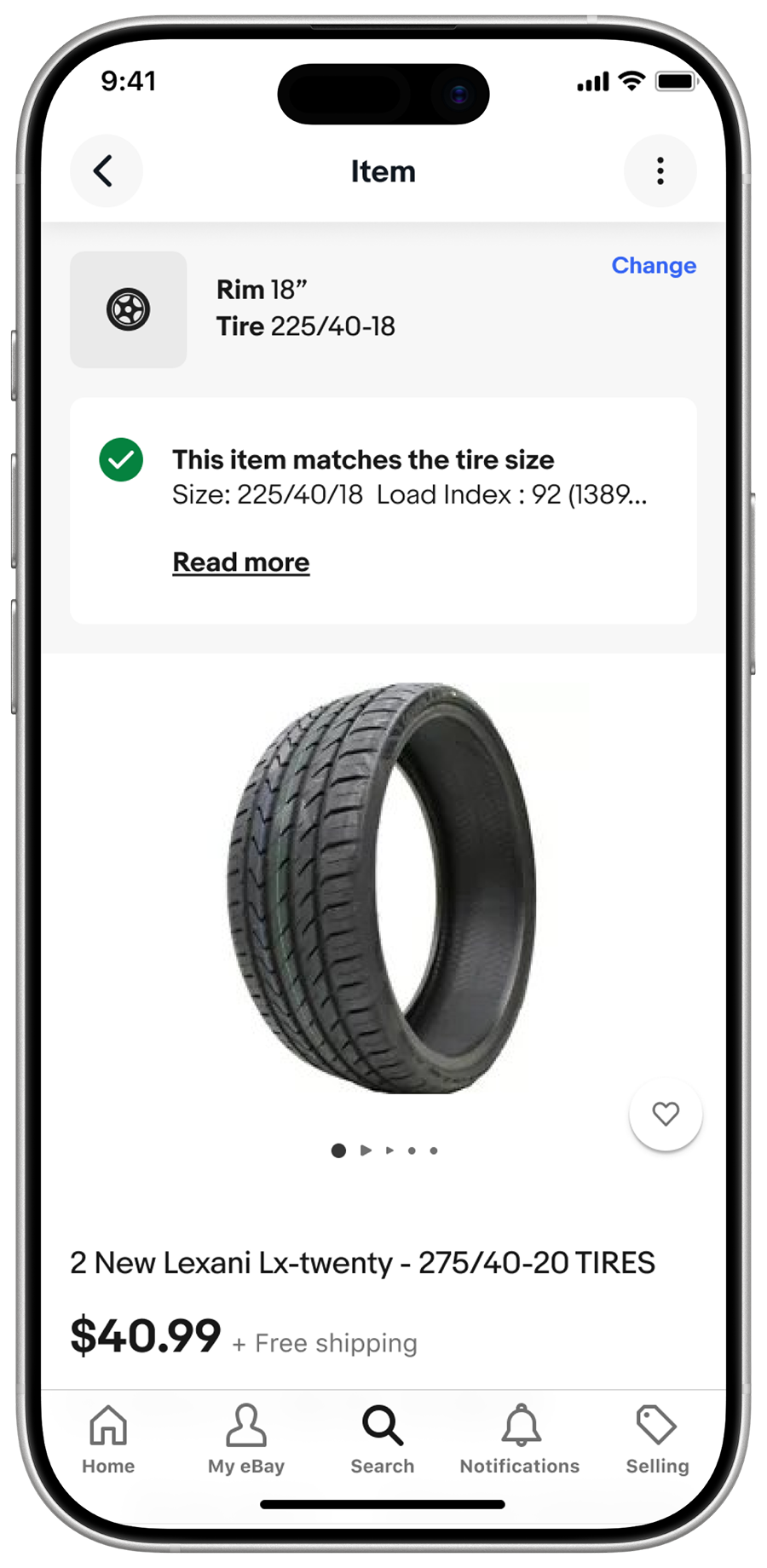
Once your vehicle is added, it replaces the Finder's Add Vehicle module. Every part that fits it carries the "Fits Your Vehicle" badge, backed by an actual guarantee: if a part carries the badge and doesn't fit, eBay covers the cost. On product display pages, a much larger version of this lives at the top of the page. If you tap "Change," a list of your saved vehicles is shown, or you can enter a new vehicle at the end of the carousel.
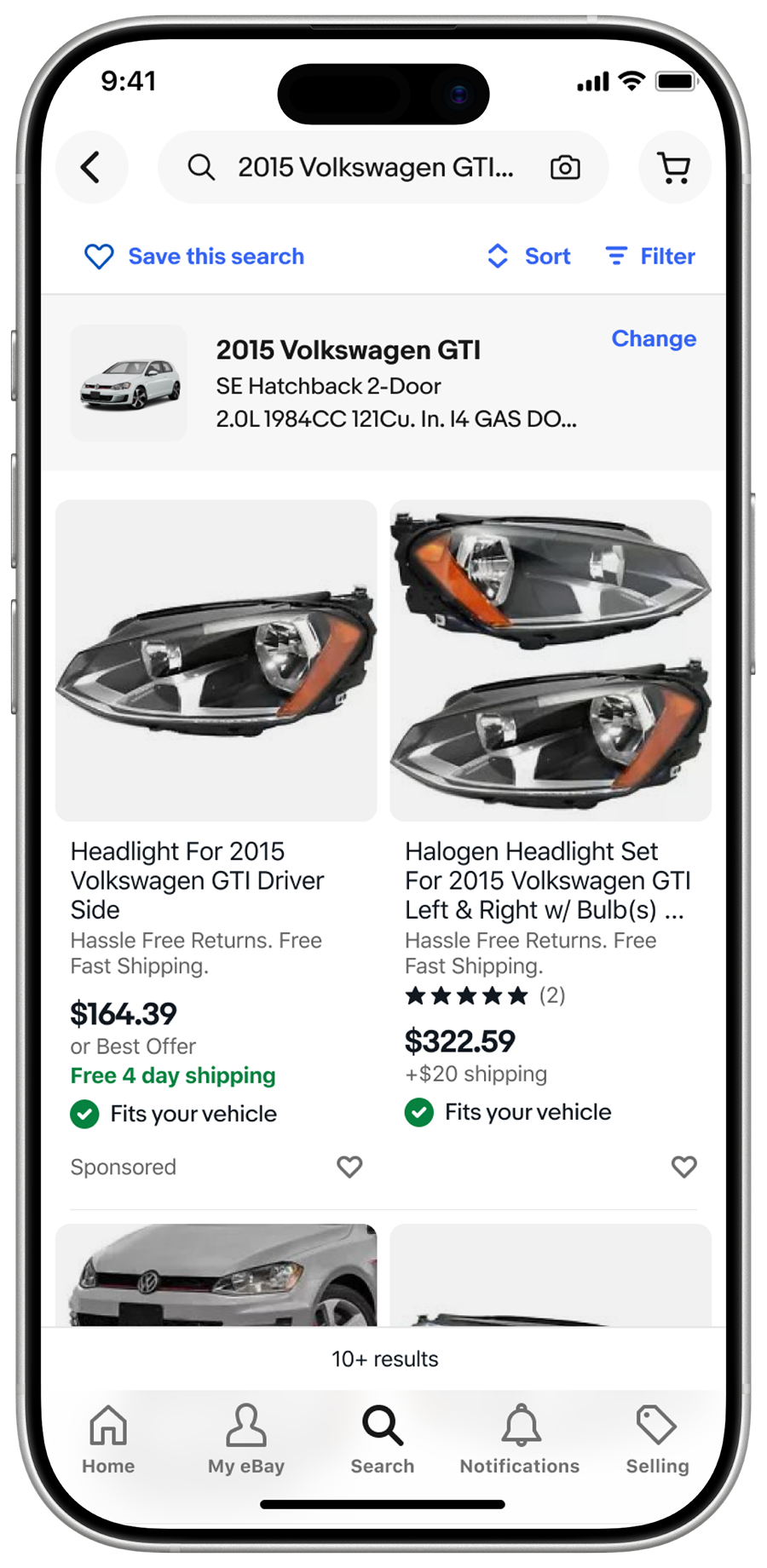
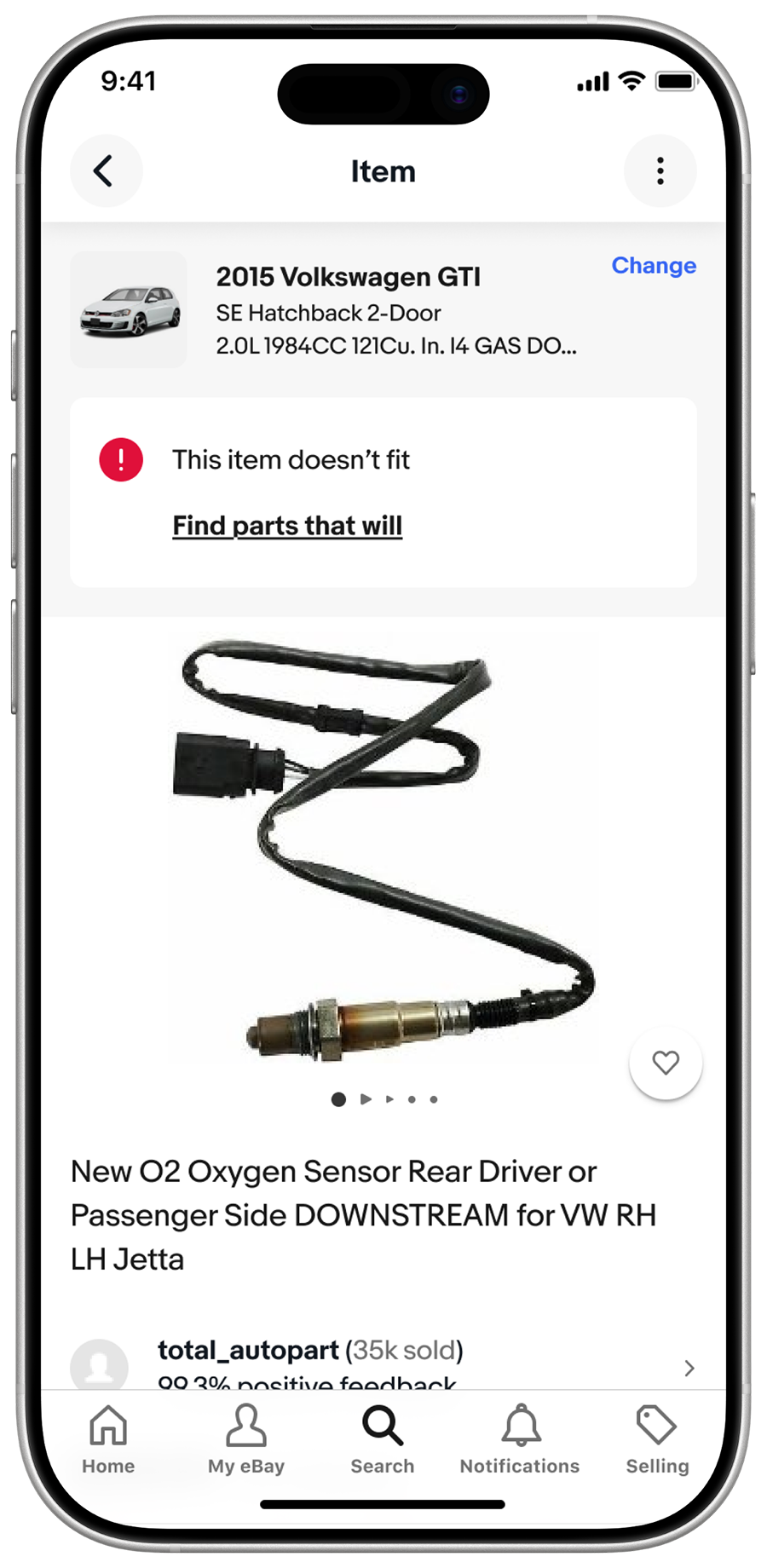
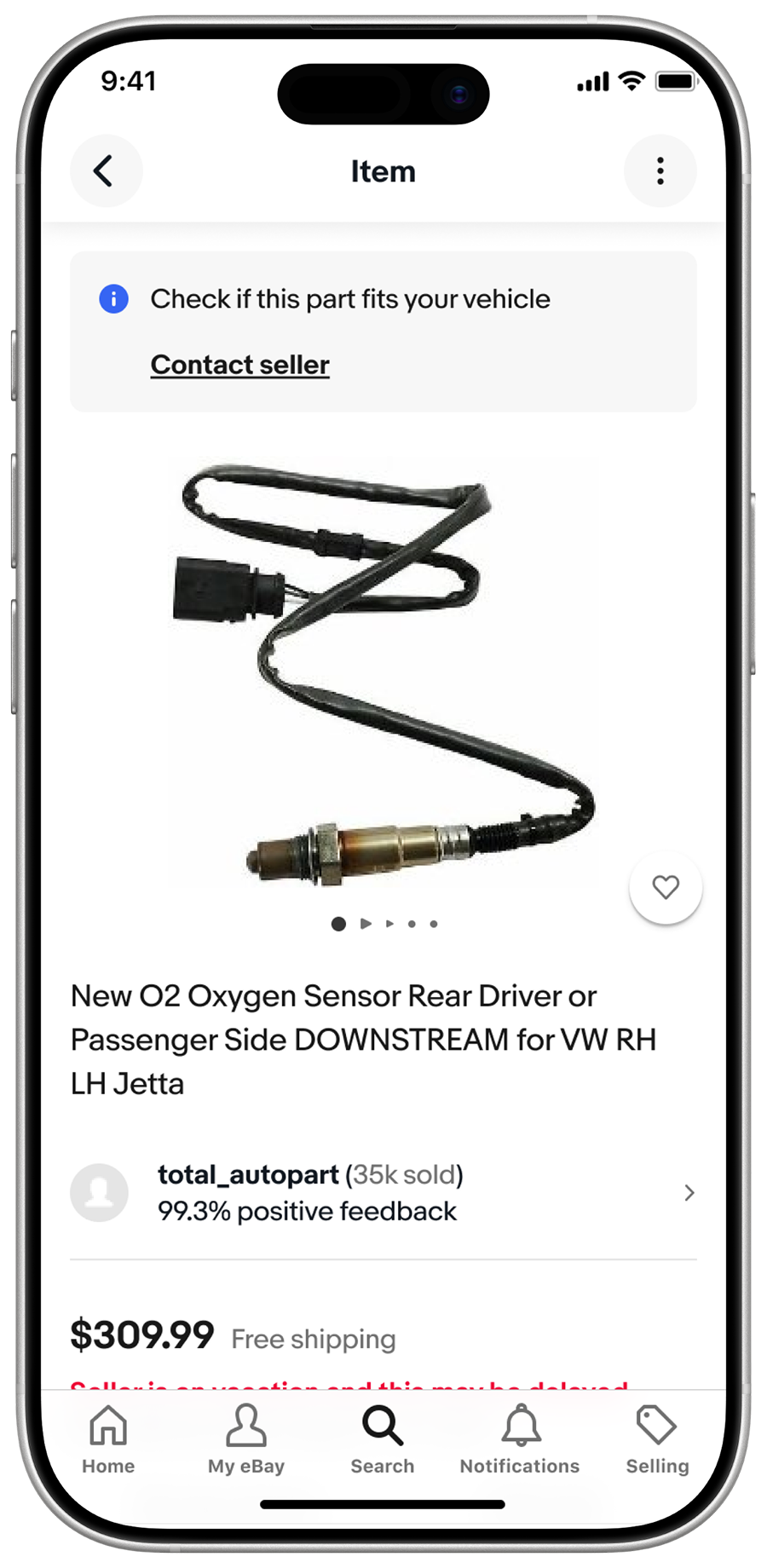
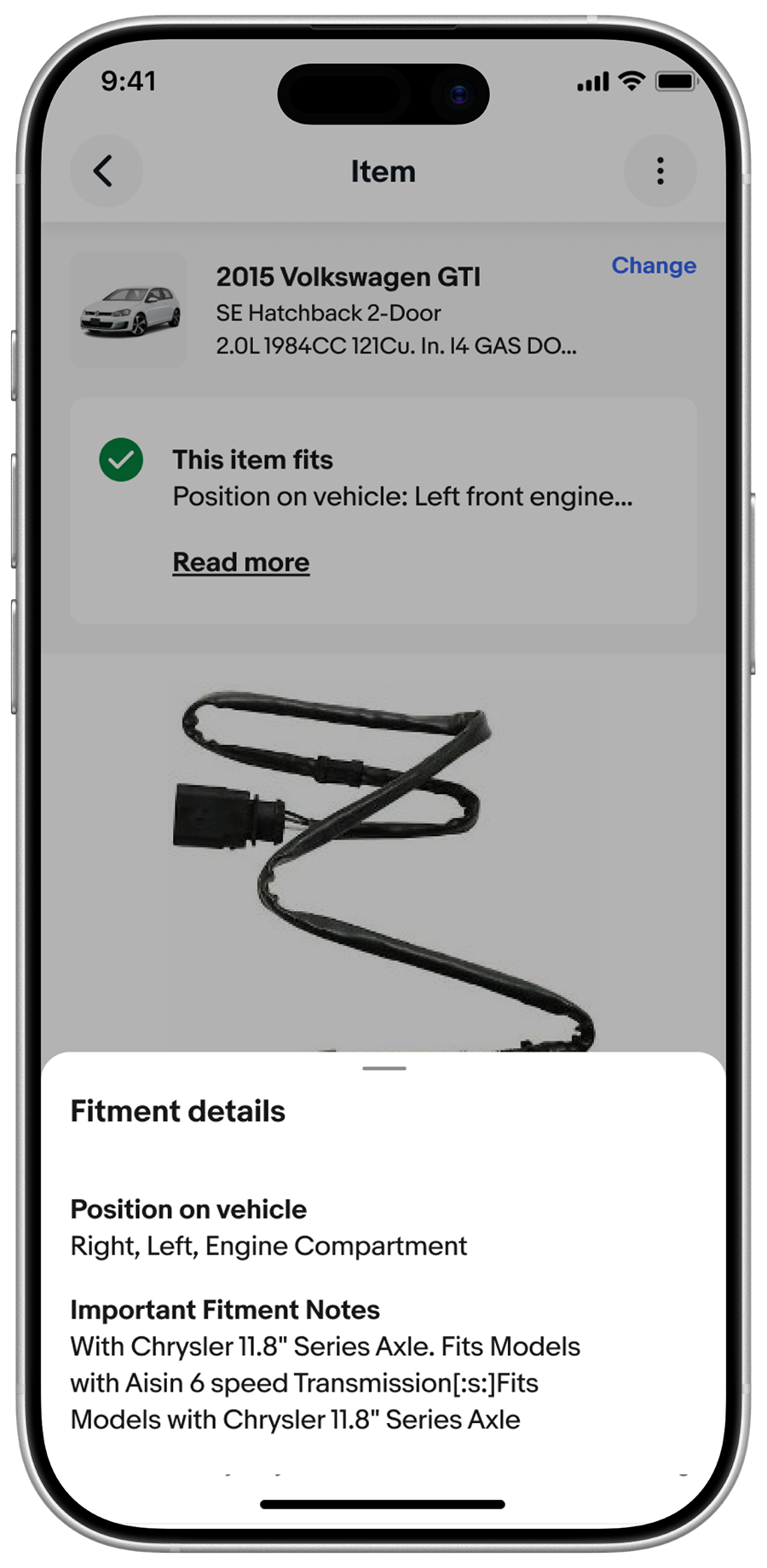
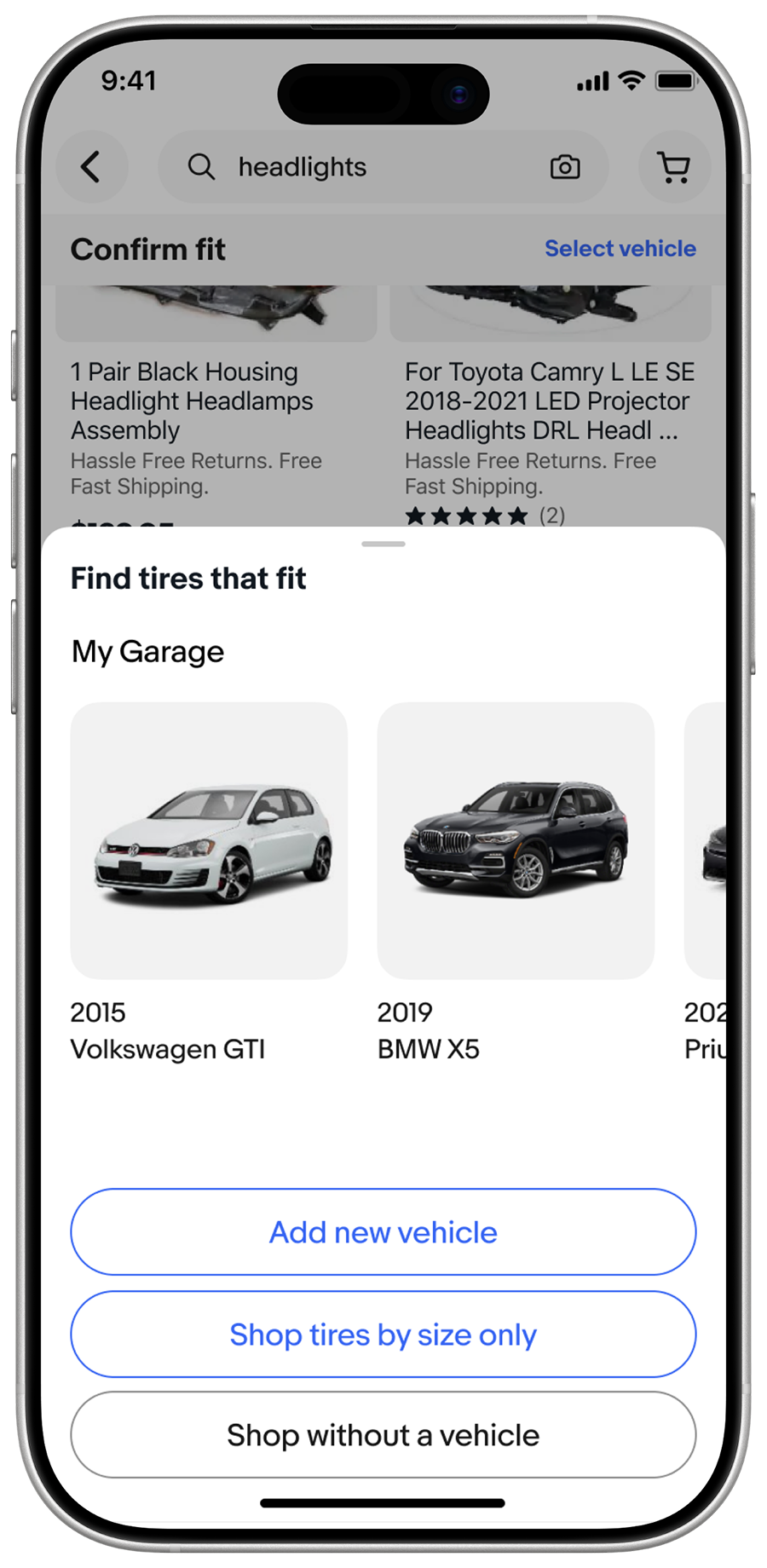
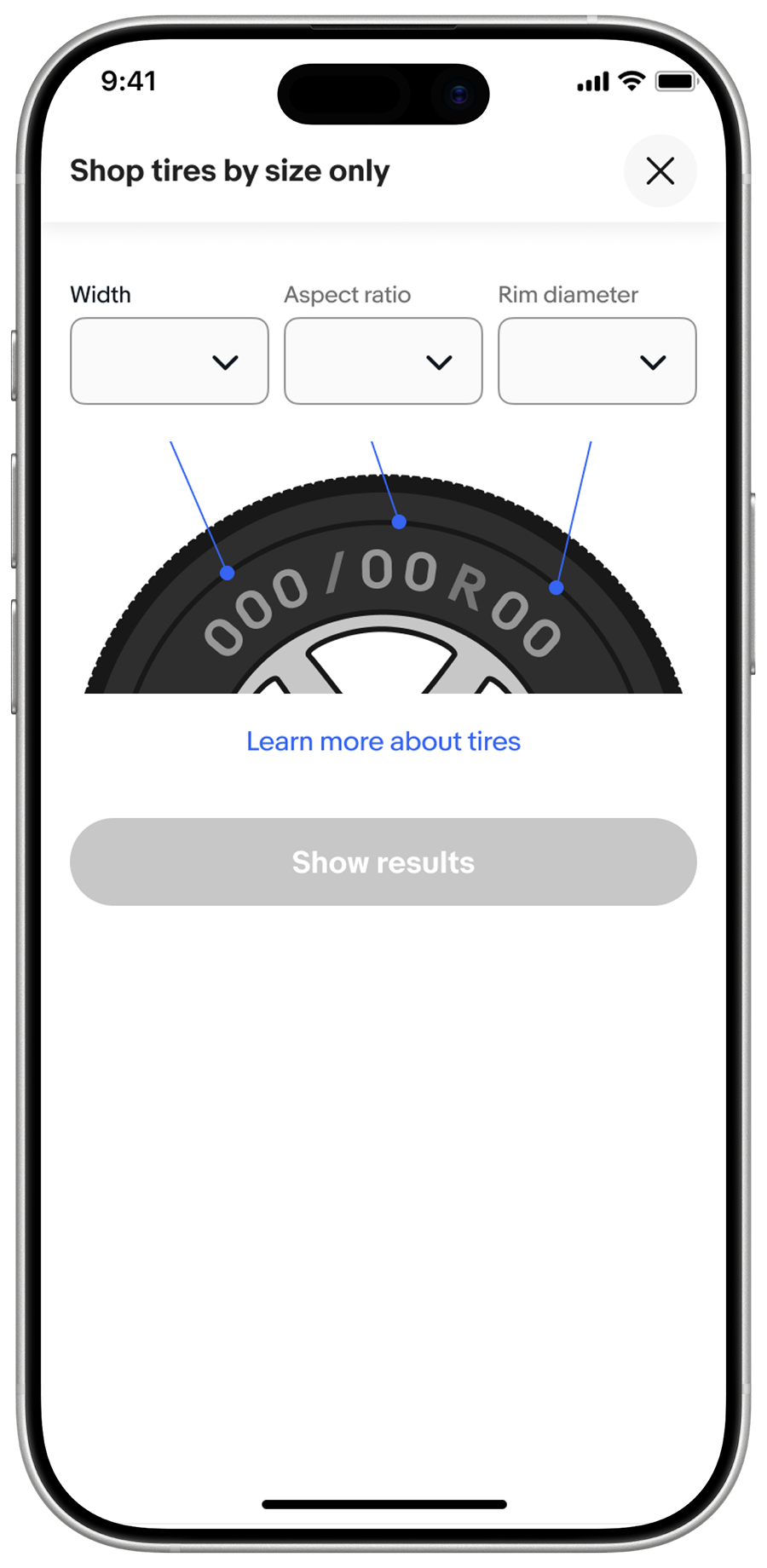
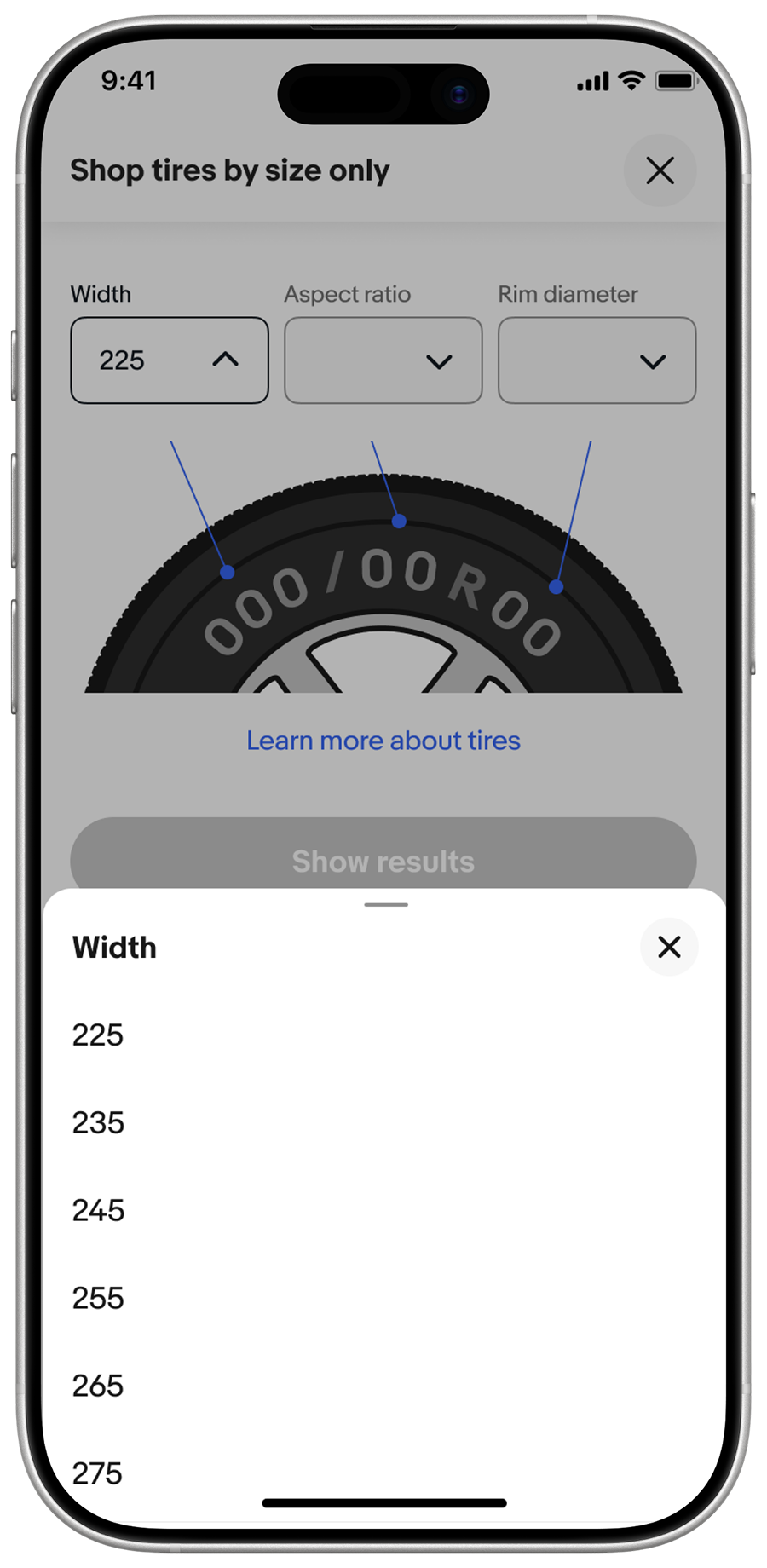
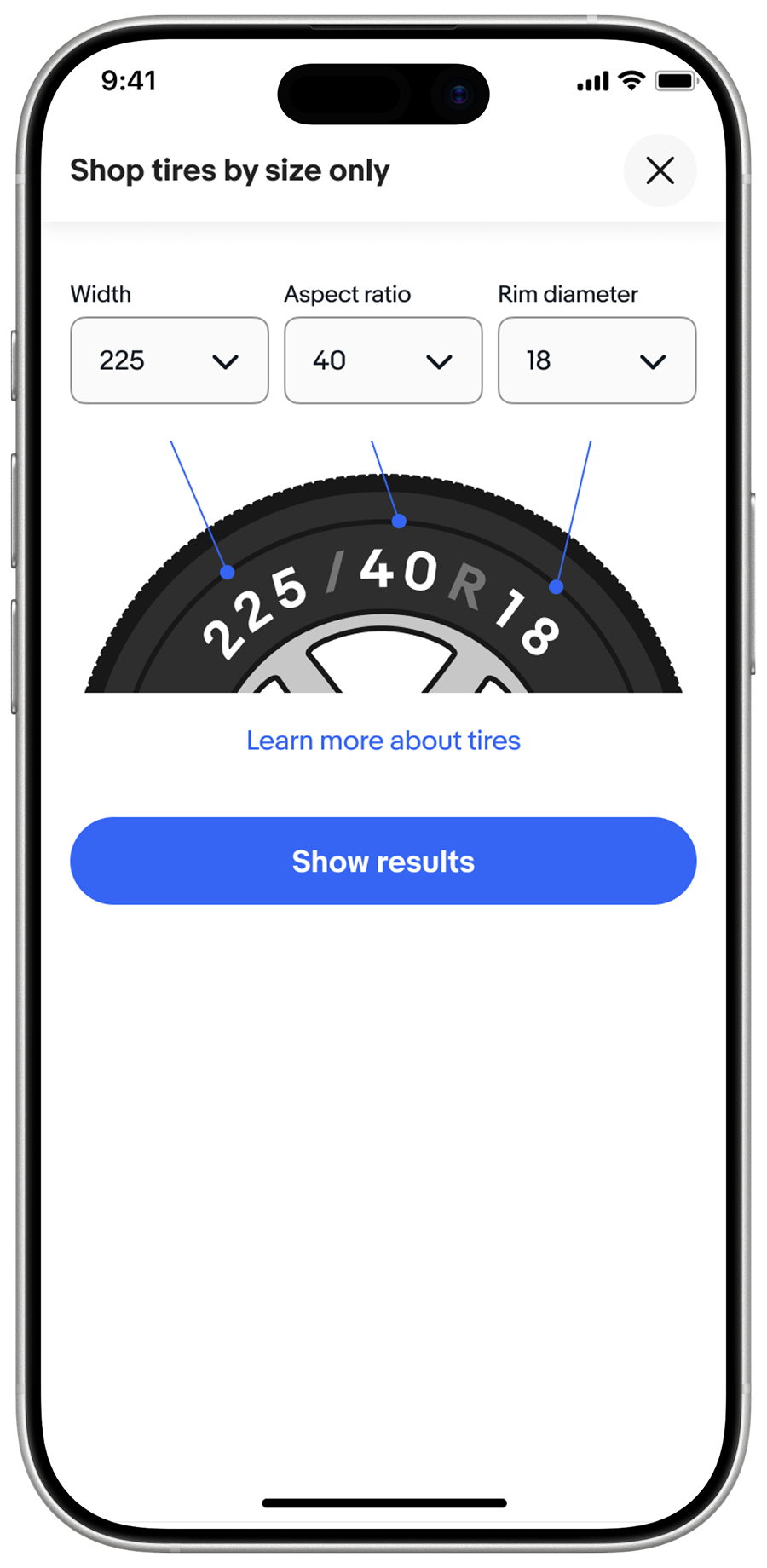
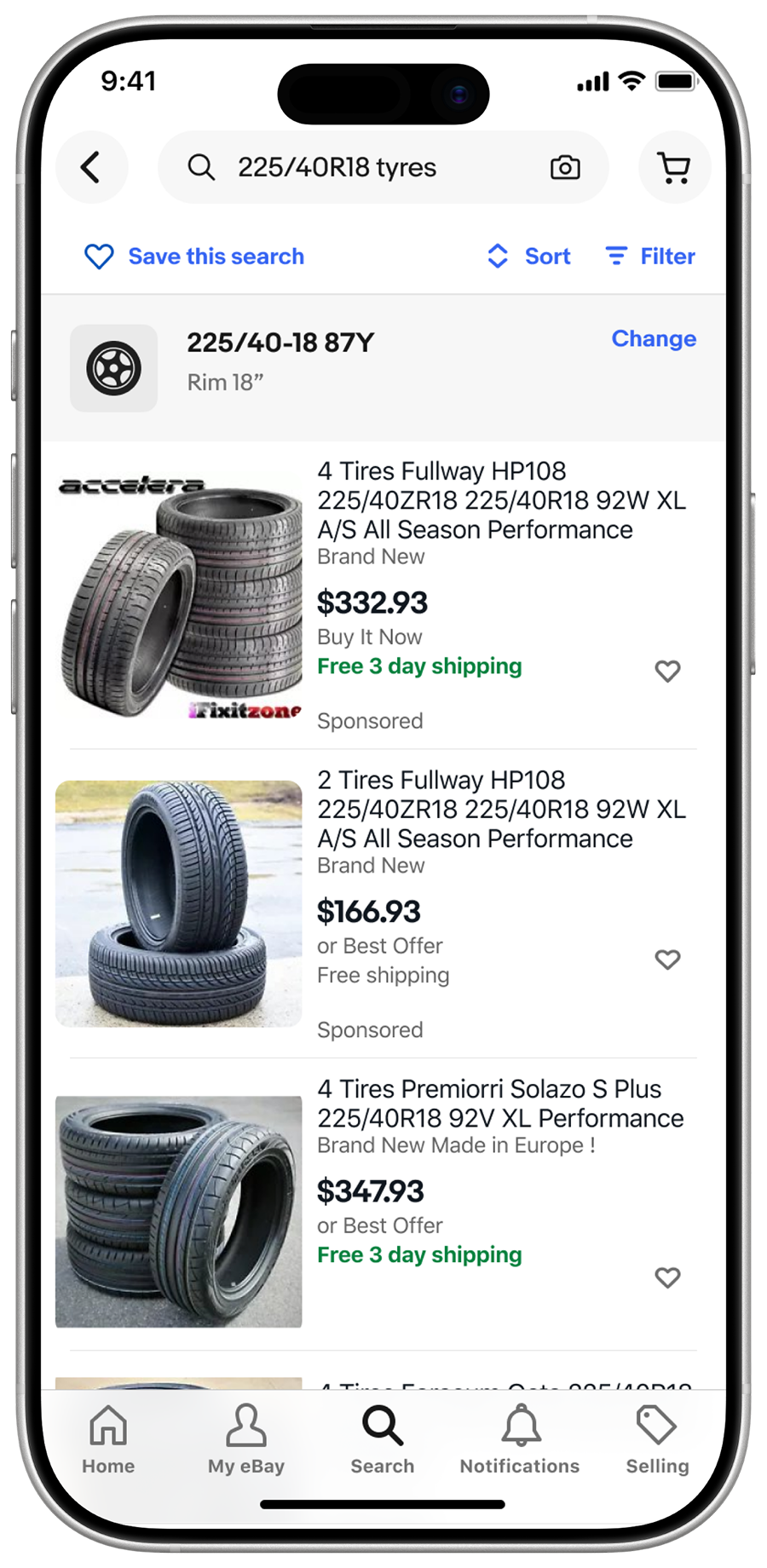
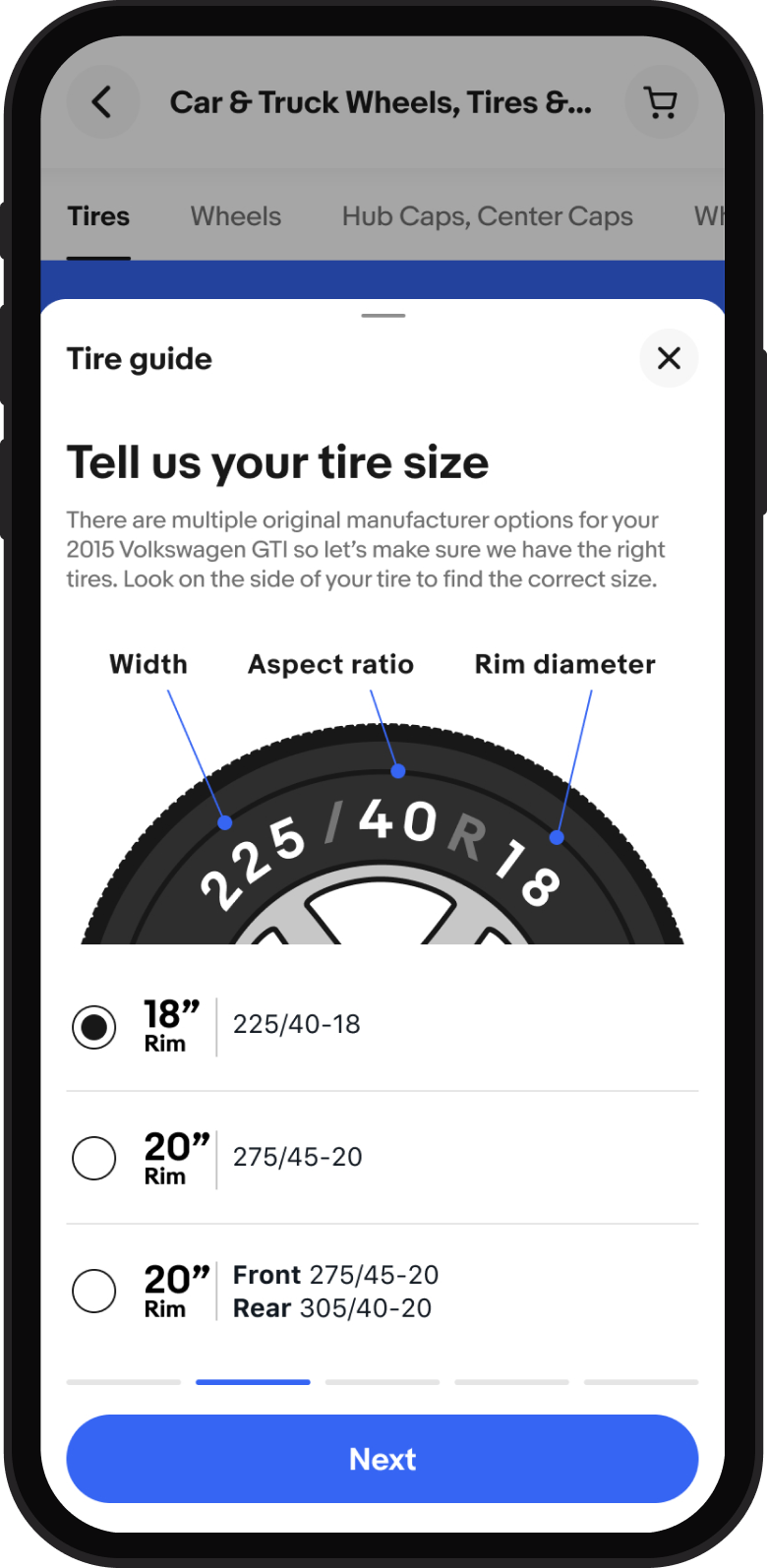
Sometimes it's easier to just find a tire by size instead of by vehicle, so you can switch context entirely and browse that way. While browsing by vehicle, size (or sizes, if your front and rear differ) and rim size are also shown alongside your match.
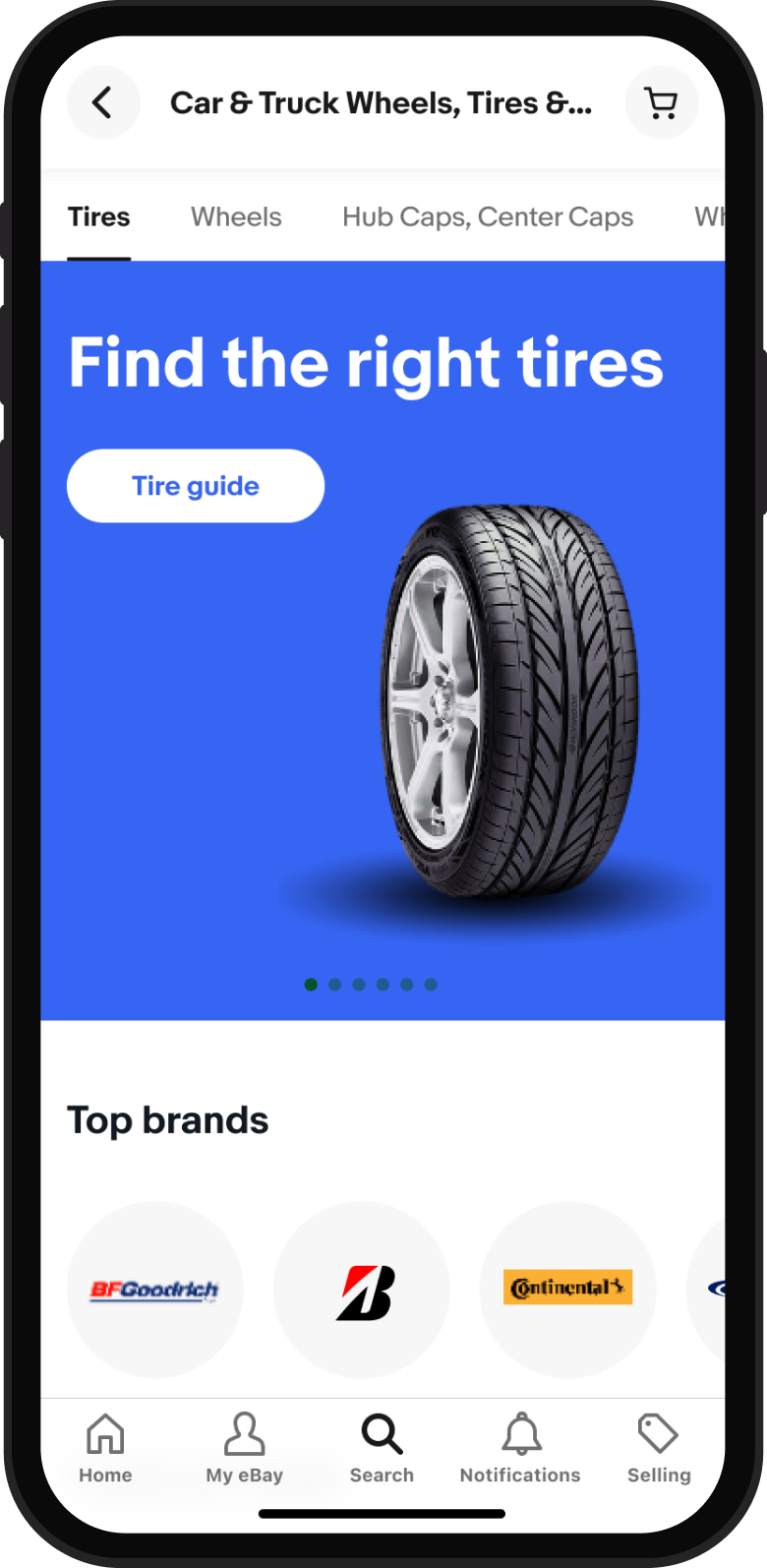
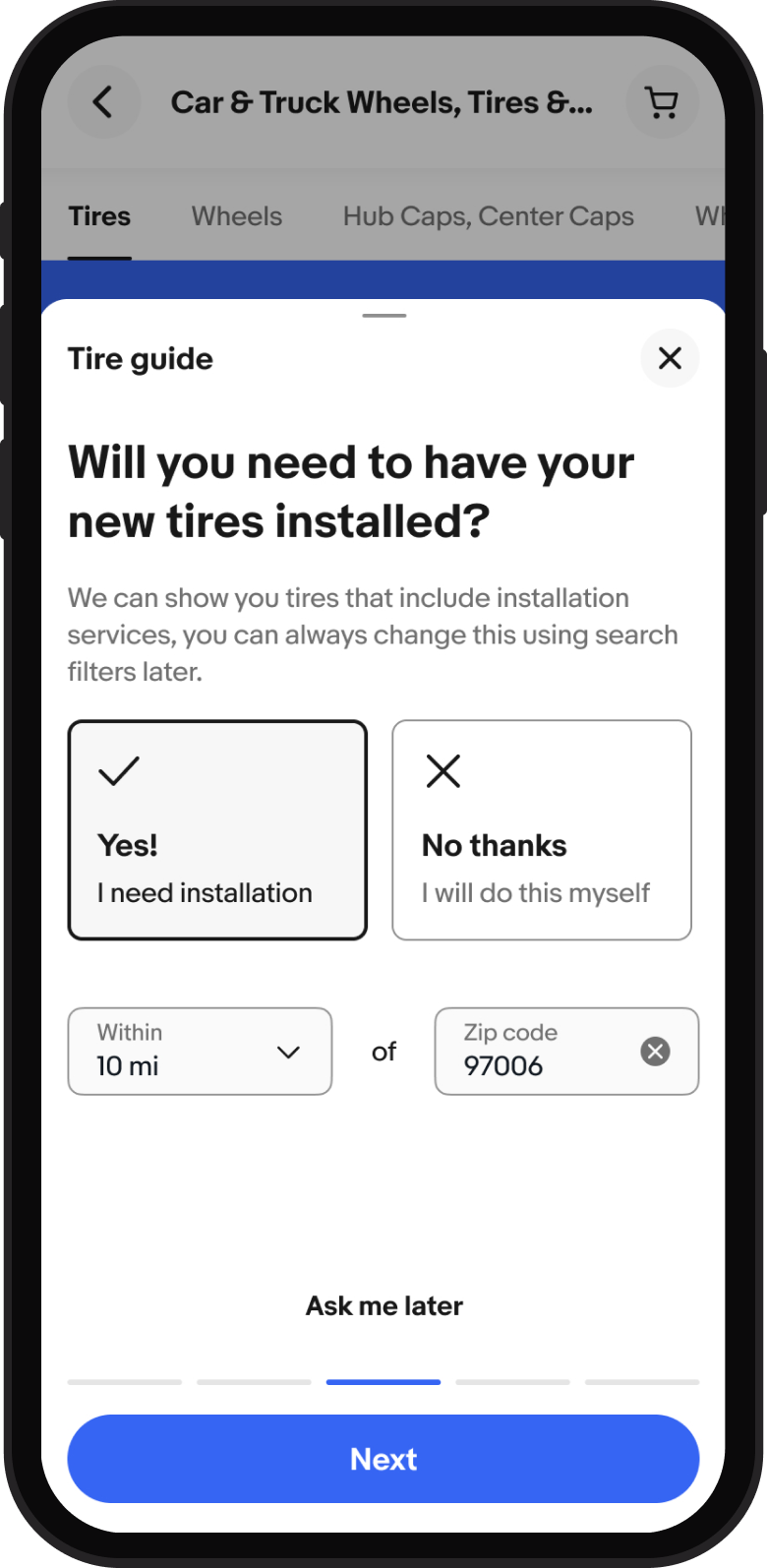
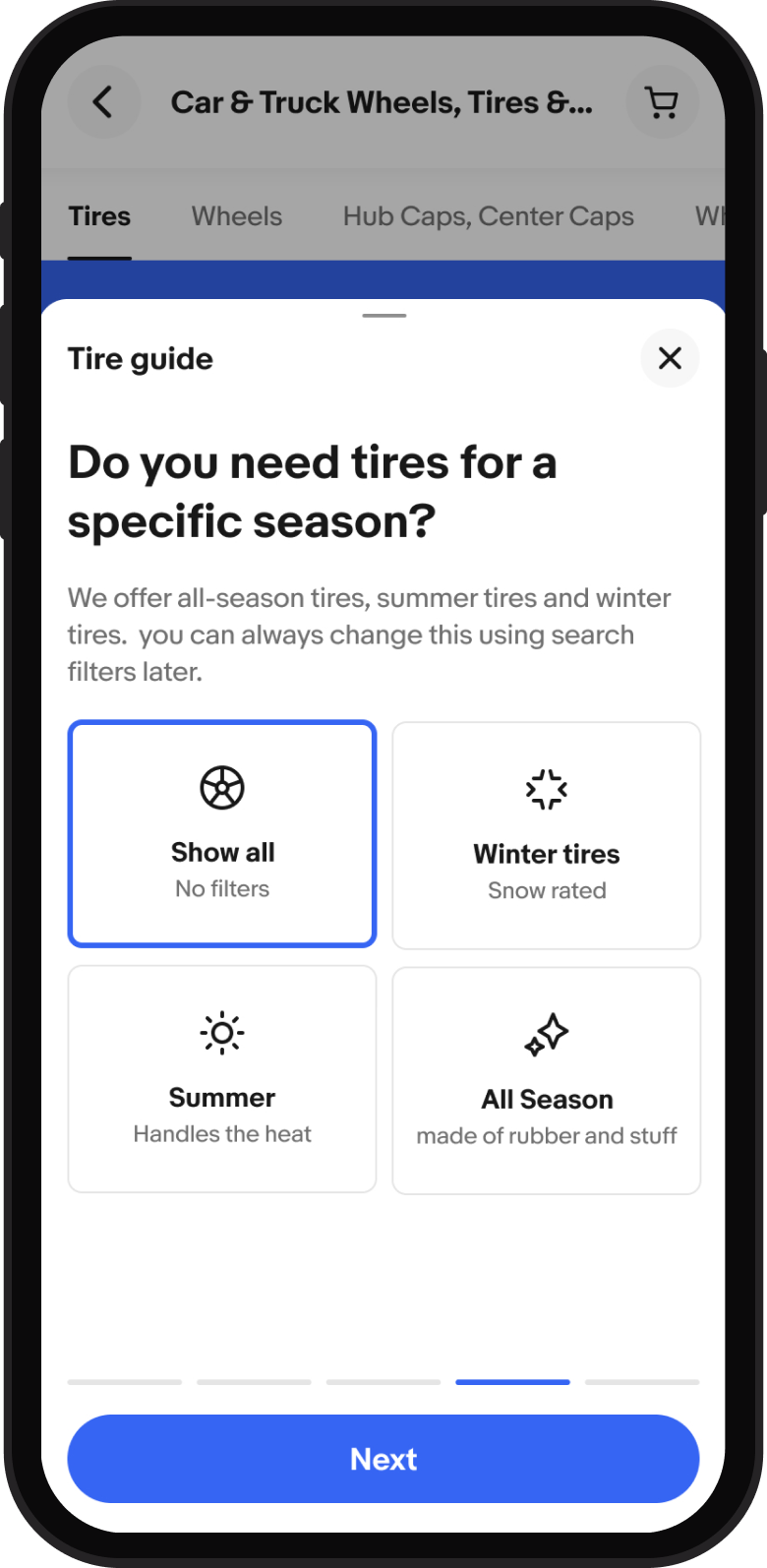
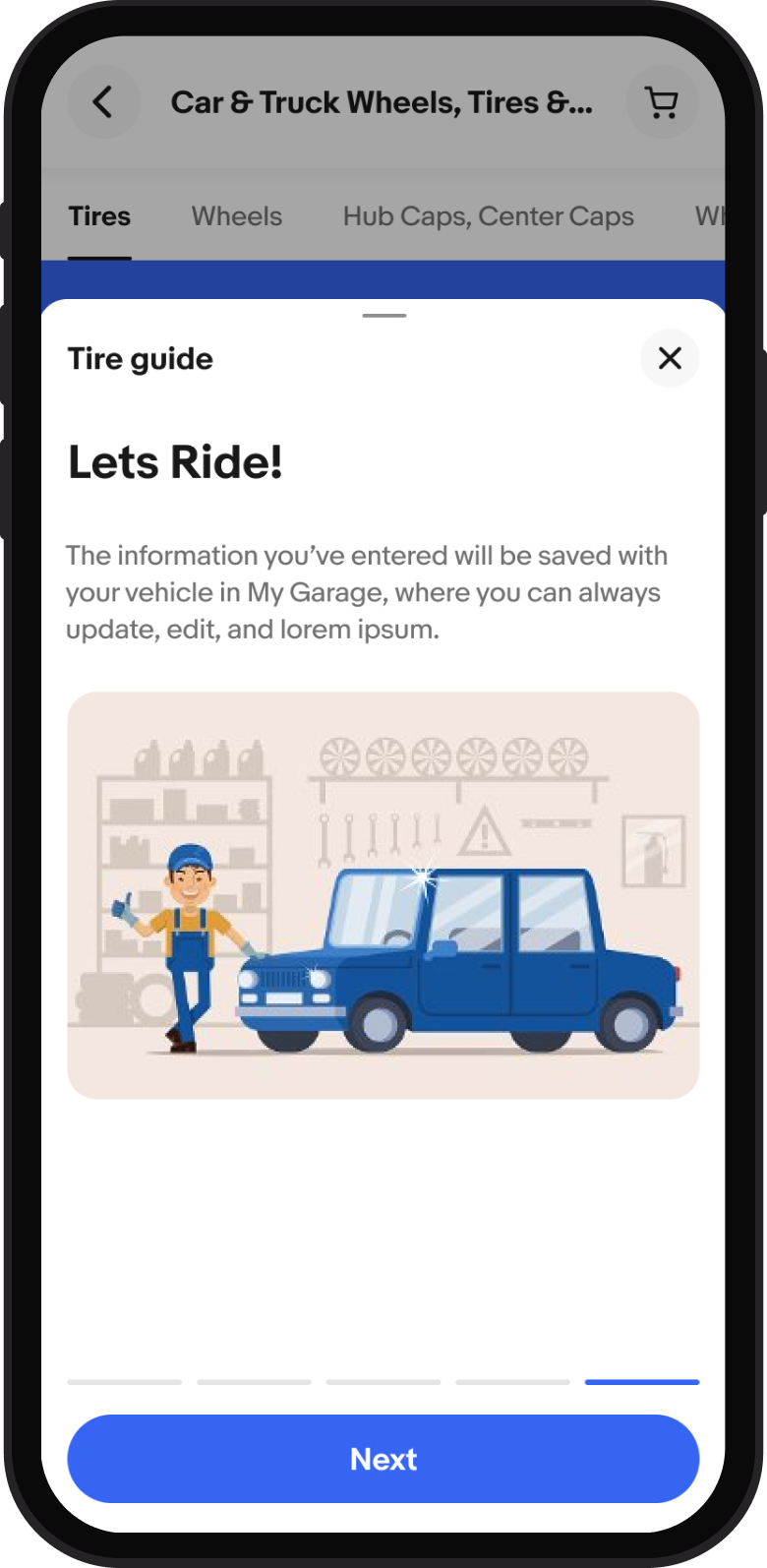
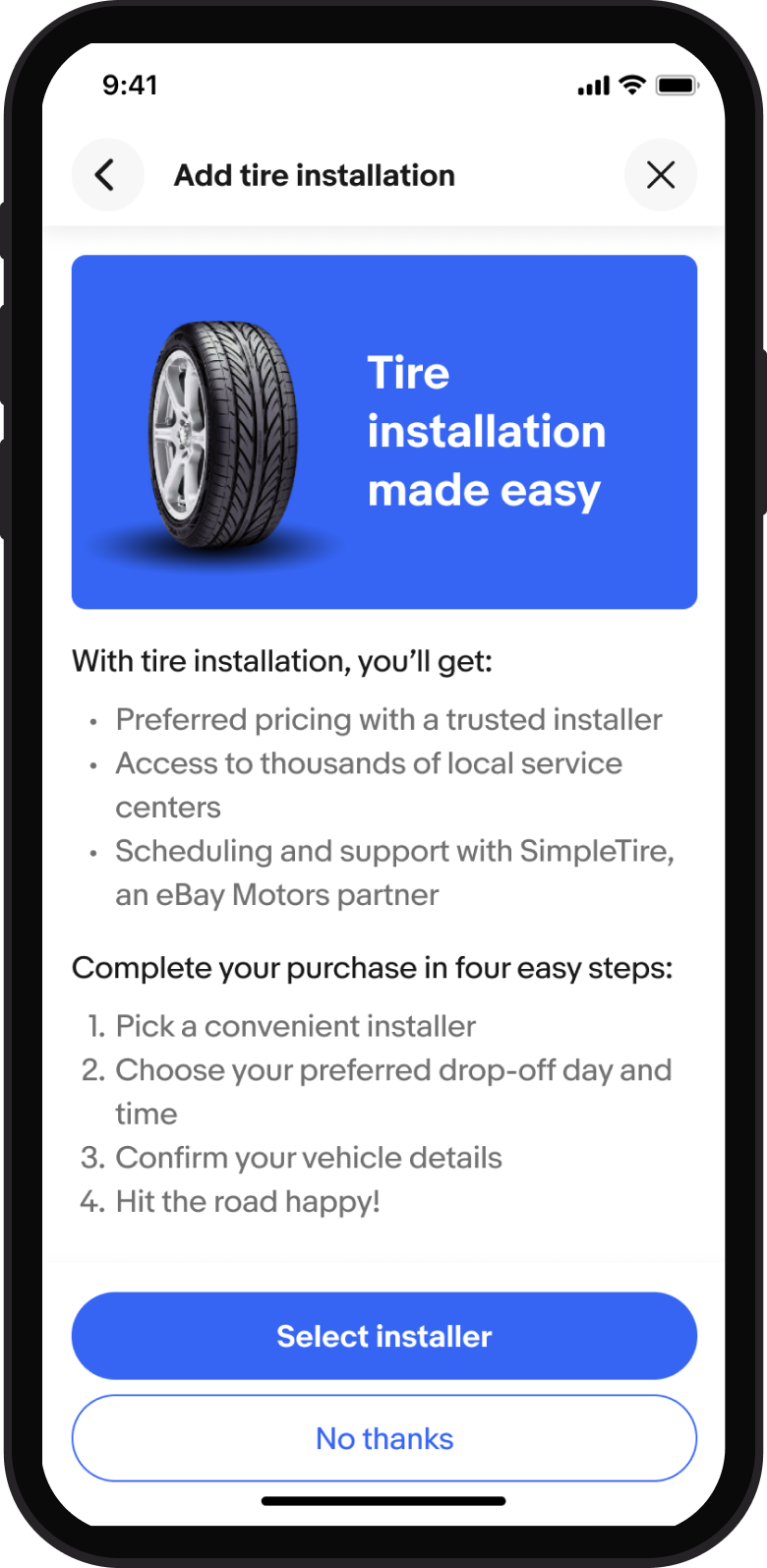
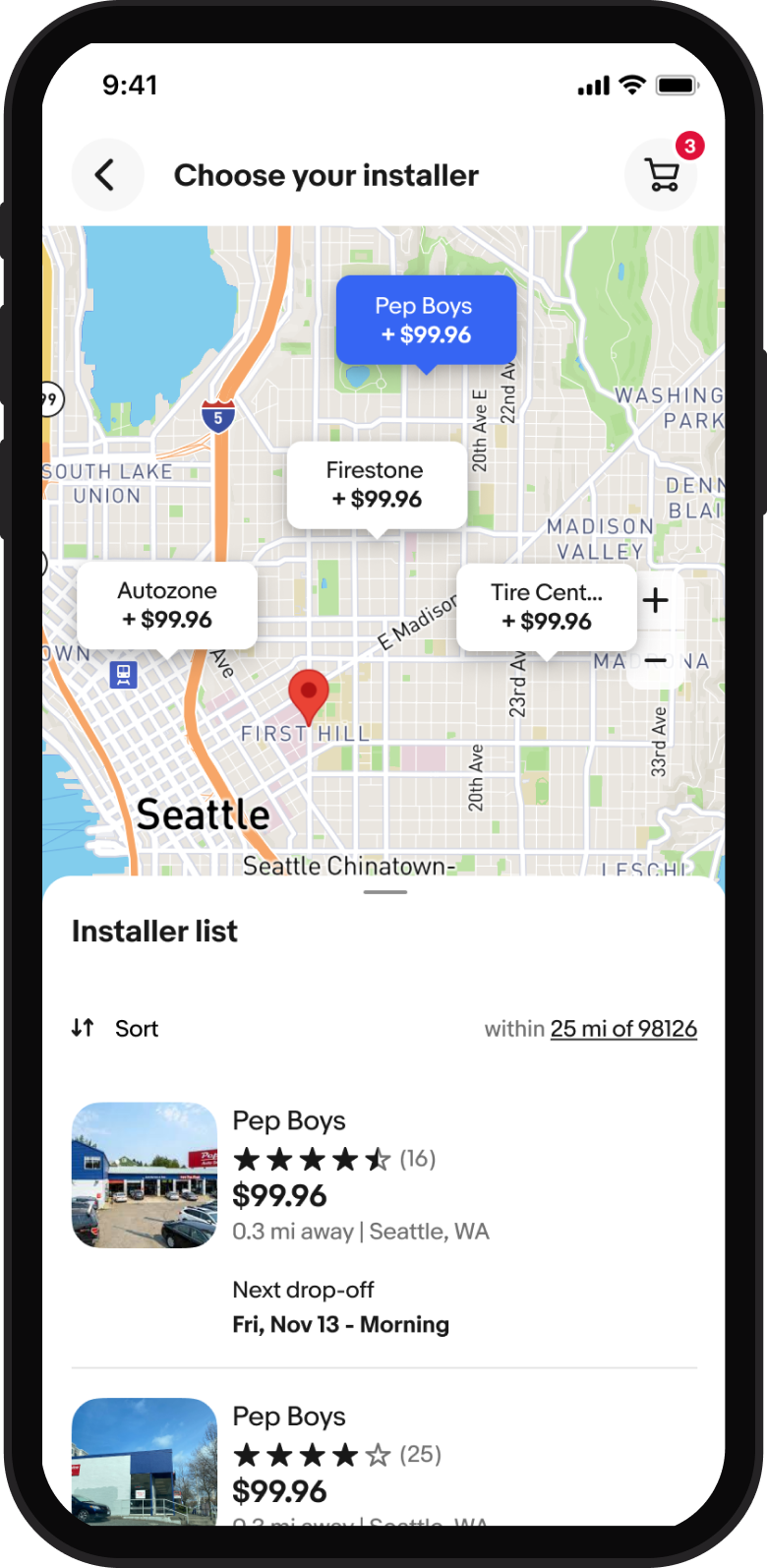
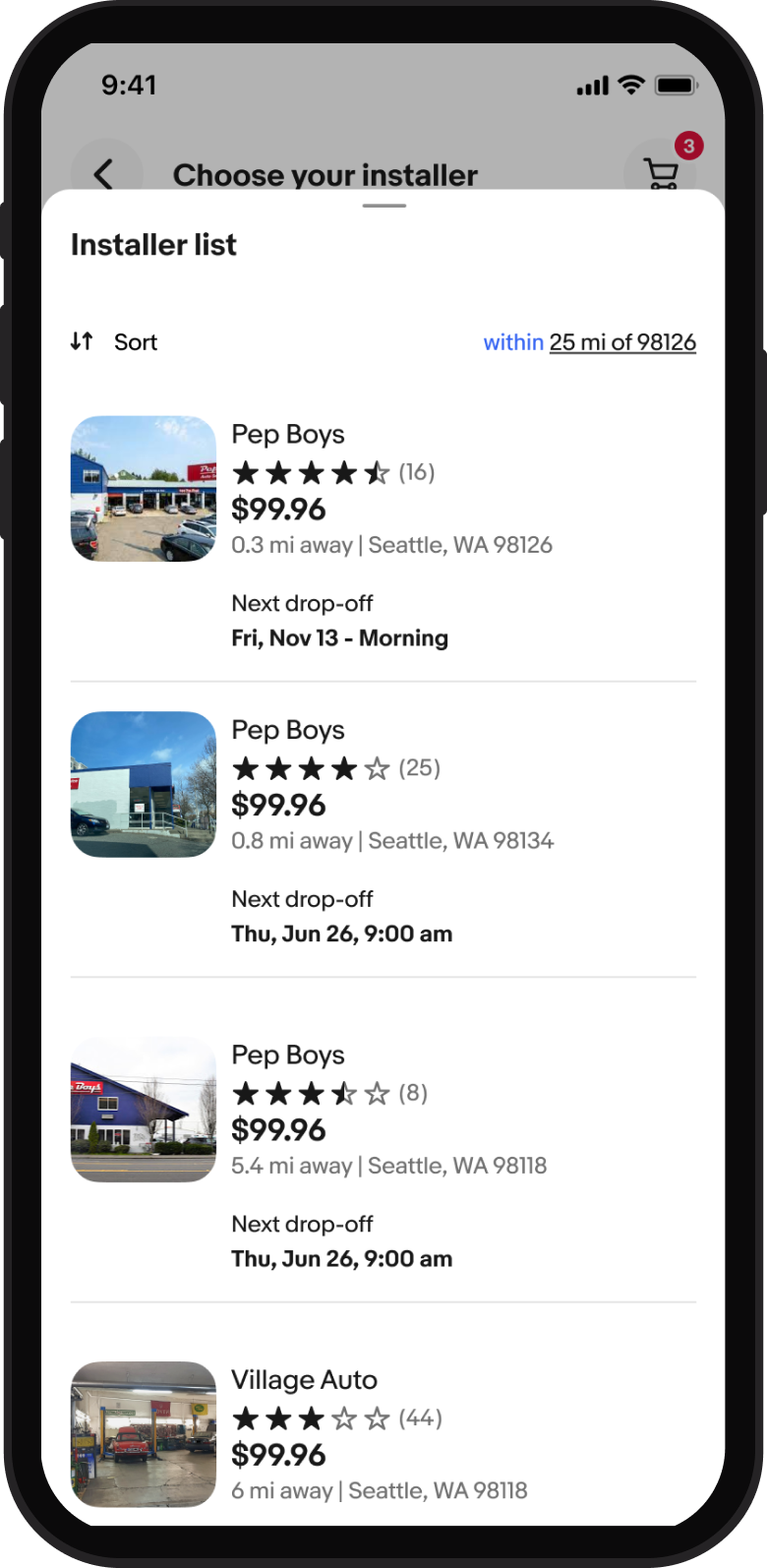
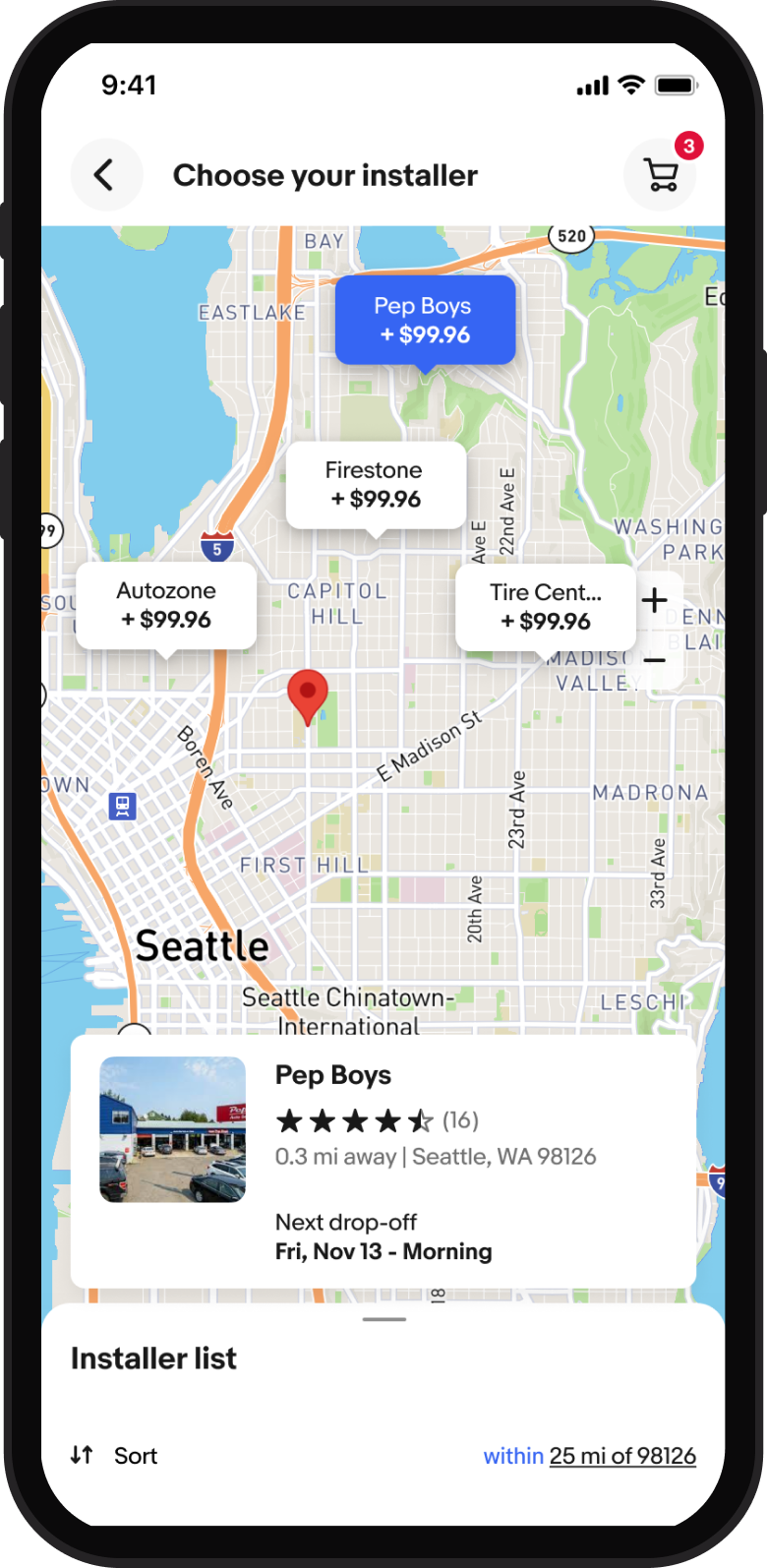
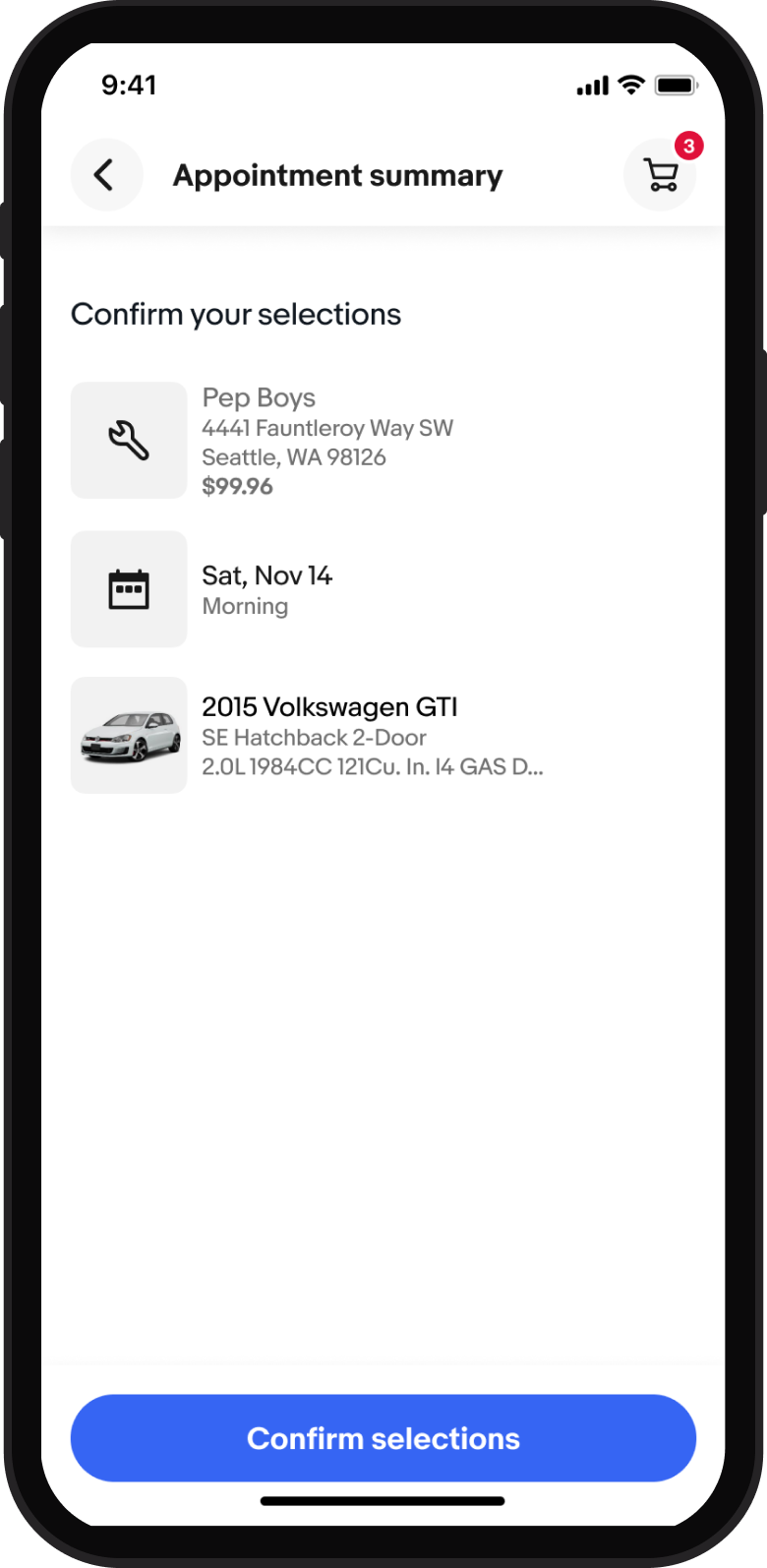
The installation flow I designed made it simple to find nearby installers, book an appointment, and know exactly when and where to bring your vehicle. A 14-day calendar with simple Morning or Evening drop-off windows, a pattern borrowed from how brick-and-mortar tire shops already work, replaced the old "someone will contact you" message with something a customer could actually plan around.
How I got it built
Both systems depended on alignment beyond design. Fitment's badge placement across search, product pages, and checkout required a months-long negotiation with Search, product grids, PDP, checkout, and the buy box, teams whose instinct to protect their space made sense everywhere else on the platform, grounded in customer evidence rather than a design opinion. For Tire Installation, I wrote design principles for every surface the work touched as its own short worksheet, what has to be simple, what we're not solving yet, what the empty state says, so engineering could start building before every technical question was settled.
Results
-9% Returns vs. Q1 baseline
+0.86% GMB growth
+12% Finder completion vs. Q1 baseline
Guaranteed Fit
Returns dropped 9% against Q1 baseline, fewer people ordered a part, waited for it, found out it didn't fit, and had to ship it back and start over. GMB grew 0.86%, more people who were on the fence actually bought. Finder completion rose 12% over baseline, more people finished telling us what car they drive instead of giving up partway through.
Tire Installation
Shipped measurable improvement, badging, checkout clarity, a working calendar and confirmation flow, against a 0.02% starting baseline. eBay's three-year goal was to bring attach rate up to the industry standard of 10-15%. The program was always planned in phases well beyond this release, Phase 3 was a full migration to eBay's VAS platform, so the complete attach-rate story plays out over a longer timeline than any single phase can show.
Beyond the metrics
The fits/doesn't-fit/might-fit model behind Guaranteed Fit isn't unique to car parts, it's the standard shape of any compatibility problem, does this lens work on this camera body, does this blade fit this mower, does this cartridge work in this printer. I'd already pitched extending that same thinking once before, at Walmart, and when I ran into the same shape of problem again at eBay, I made the case a second time. It wasn't part of the roadmap I was driving, but the idea got traction with other category teams, and it's entirely possible some of that thinking lived on in categories I wasn't tracking closely after I moved on. Tire Installation's own roadmap carried the same instinct forward on its own terms: more installation partners, more regions, eventually other categories across Parts & Accessories.
That year, I was leading both initiatives at full stretch, two major programs running in parallel, while also coaching a newer designer through her own ramp-up. eBay recognized that with two Spot Awards, one for stepping in to lead Finders through a leadership gap, one for the cross-project work itself.